Deported from the US to Liberia, a country they’d never heard of: “They kept us chained up for the whole flight”
Three Latin American migrants near Monrovia tell El Pais how they were detained by ICE and deported to the West African nation—a country to which none of them had any ties.
_____________________
“I only found out I was being deported to Africa a few hours before the flight. Nobody actually told me; I just happened to catch a glance of my name on a list of people who, without realizing it, were getting shipped off to Liberia—a country I’d never even heard of. I didn't have time to fight it legally or say goodbye to my family. There was nothing I could do: it was all already decided.”
C. is a 36-year-old Venezuelan who spent the last five years living and working in the United States. On 19 August, US Immigration and Customs Enforcement (ICE) officials loaded him onto a charter flight out of Alexandria, Louisiana, bound for Liberia. On board were fellow deportees from across Latin America, the Caribbean, and sub-Saharan Africa.
They are the first group of roughly 1,200 people that Joseph Boakai’s government in Monrovia has agreed to take in over the course of a year. The arrangement marks one of the most expansive bilateral deals brokered by the Trump administration as part of its crackdown on immigration.
When the charter flight carrying 20 deportees touched down in Monrovia, six passengers reportedly refused to disembark and were subsequently flown on to Malabo, Equatorial Guinea. Those who remained, including C., have spent over a week at a hotel in Marshall—a coastal town 30 miles outside the capital.
Between 20 January 2025 and 15 August 2026, Washington struck transfer deals with more than 35 countries across Africa, Asia, and the Americas. In that time, the US has expelled over 23,000 people to 26 nations, according to data tracked by Human Rights First and Refugees International. More than 300 detainees have been sent to 14 African nations, including Liberia, the Central African Republic, the Democratic Republic of the Congo, Eswatini, and South Sudan.
Rights groups say the most alarming trend is that those being expelled include individuals with legal status and active withholding-of-removal orders—a legal protection that bars forced repatriation to a home country where a person faces a clear risk of persecution or torture. The safeguard is enshrined in both the UN Refugee Convention and the Convention Against Torture.
This article was originally published in EL PAÍS, on September 7, 2026.
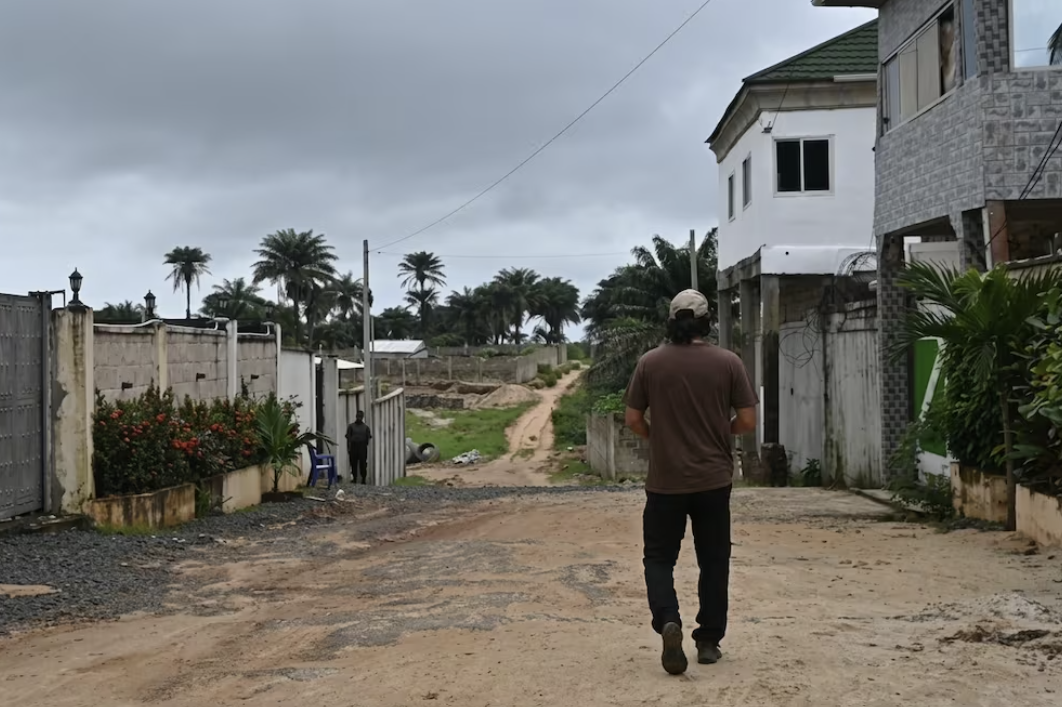
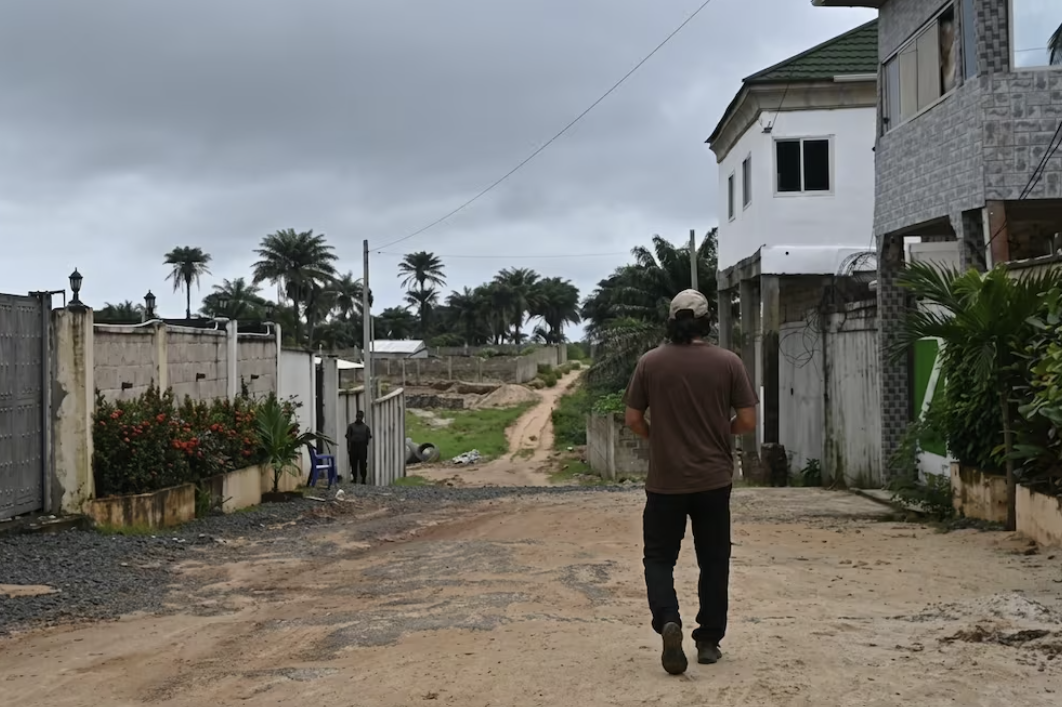
C., a Venezuelan man deported to Liberia, walks near the hotel where he is being housed by President Joseph Boakai’s government on 3 September 2026, in Marshall, roughly 30 miles from Monrovia. (Graziana Solano)
C., who held this protection, never imagined he would end up in one of the world’s poorest nations. Raised in the Venezuelan Andes, he fled his homeland in 2021 as the country’s political and economic crisis deepened. “As a political opponent of the regime, I took huge risks in my final year there. I fled because I was almost killed,” he says. After reaching the US, he was granted a temporary residence permit—renewable annually—that allowed him to work legally.
“I sold cars by day and delivered food at night. I was living a quiet, law-abiding life,” he says. “Then, during a routine check-in at an immigration office in December 2025, everything flipped. After about 30 minutes, they told me I was being detained so they could conduct a special investigation into my file. They said I’d be held for two weeks while they made a decision.”
Those two weeks stretched into eight long months of administrative detention, ending in his forced relocation to a country where he has no family, no legal status, and no knowledge of the language.
“Over those eight months, I was moved through nine different detention facilities. They are vile places—filthy, rat-infested. You’re locked up alongside people who have committed crimes, even though I am innocent.”
What haunts him most is missing the birth of his only child. “He was born while I was in custody. He’s five months old now, and I’ve never been able to hold him—I only see him through a phone screen. I wouldn’t wish this on my worst enemy.”
His sole comfort is that, unlike deportees sent elsewhere in Africa, he has not been placed in a cell. The Liberian government has assured that those sent to Marshall are free to move around the country, apply for local asylum, or leave altogether.
The US Committee for Refugees and Immigrants (USCRI) has condemned the use of administrative detention by the Department of Homeland Security and ICE, calling it an increasingly aggressive tactic to hold individuals without reasonable suspicion. The American Immigration Council also highlights that frequent transfers between facilities “sever people from their families and legal counsel, often dropping them in remote locations where getting legal help is practically impossible.”
In March 2025, Homeland Security published new guidelines designed to fast-track third-country deportations. Under these rules, the US simply verifies whether the receiving nation offers assurances that the detainee will not face torture or further deportation. If the State Department deems those assurances credible, the individual can be shipped out without additional hearings—and without ever being asked if they feel safe.
«When we reached the tarmac, I tried to resist, but the officer cut me off immediately: ‘You either walk up those steps voluntarily, or we carry you up by force.’ The moment we took our seats, the entire cabin broke down crying.» — A., Venezuelan deportee in Liberia
‘THEY ARE DESTROYNG FAMILIES
A., a 45-year-old former wind-energy worker from Venezuela, was shuttled through four detention centers in a matter of months before his deportation. His lawyer was never notified of the moves or his pending removal.
“It started earlier this year when my wife and I went in for a routine check-in. We both had protection against deportation to Venezuela and clean records,” he says. “They let her walk out, but they detained me—and now here I am.”
Months in detention triggered severe panic attacks and depression. By the time he was ordered onto the plane to Liberia, he feared he was being flown to his death.
“I was terrified. ICE officers use psychological terror—the silence, the deliberate vagueness, the hostility,” A. says. “When we reached the tarmac, I tried to resist, but the officer cut me off immediately: ‘You either walk up those steps voluntarily, or we carry you up by force.’ The moment we took our seats, the entire cabin broke down crying. We were kept in hand- and leg-cuffs for the entire 15-hour flight.”
Like C., A. had been granted protection from removal. When officers initially told him he was being returned to Venezuela, he warned them his life would be in danger due to his political opposition work. “They just said: ‘You’re not in danger anymore. Venezuela is free now.’ But it isn’t free. My friends in the opposition back home are still living in constant fear.”
“My daughter has been in therapy ever since I was taken,” A. says, breaking down. “She keeps asking me on the phone: ‘Daddy, why are you over there? You didn’t do anything wrong.’ My eldest son wants to drop out of school to find work and support the family. It’s traumatizing. They are destroying entire families.”
His biggest fear now is that ICE will come for his wife next. “If they detain her too, my kids will be completely on their own. We’re all they have,” he says. “I don’t want to live in America anymore. I’d rather apply for asylum in Europe and bring my family there. They got what they wanted—they killed my dream. If I didn’t trust politics before, I’ve lost faith in humanity entirely now.”
A. acknowledges that local officials have treated them well. “The welcome here has been warm. The hotel rooms are clean, we have our own space, and we can come and go. I don't want to stay in Liberia, but at least I am a free man.”
«I don’t want to live in America anymore. I’d rather apply for asylum in Europe and bring my family there. They got what they wanted—they killed my dream.»
W., a 40-year-old Honduran national, says officials from the International Organization for Migration (IOM) visit daily and are providing him with medication for his diabetes. None of the men wish to stay, and they are working through a Liberian attorney to coordinate with legal defense teams back in the US.
“Once you step outside the hotel gates, it’s a different story. None of us feel safe here,” says W., who refuses to venture more than a few yards from the entrance out of fear of being robbed or attacked.
W. still clings to the hope of returning to his family. “I’ve been deported twice under the Trump administration: first back to Honduras, and now here to Liberia,” he says.
He was pulled over by police in New Orleans in July while driving to pick up his wife from work. He was bounced through the Jackson Parish Correctional Center in Louisiana before being moved to the airfield in Alexandria.
He recalls the chaotic scenes at the terminal as several Cuban and Guatemalan detainees panicked. “Some of them started resisting, and the ICE agents tackled them and bound them tightly,” he says, mimicking someone tied up from head to toe. “Watching that broke me. I just sat there crying, wondering what had happened to the America I knew—the place where I felt safe to build a life with my children.”
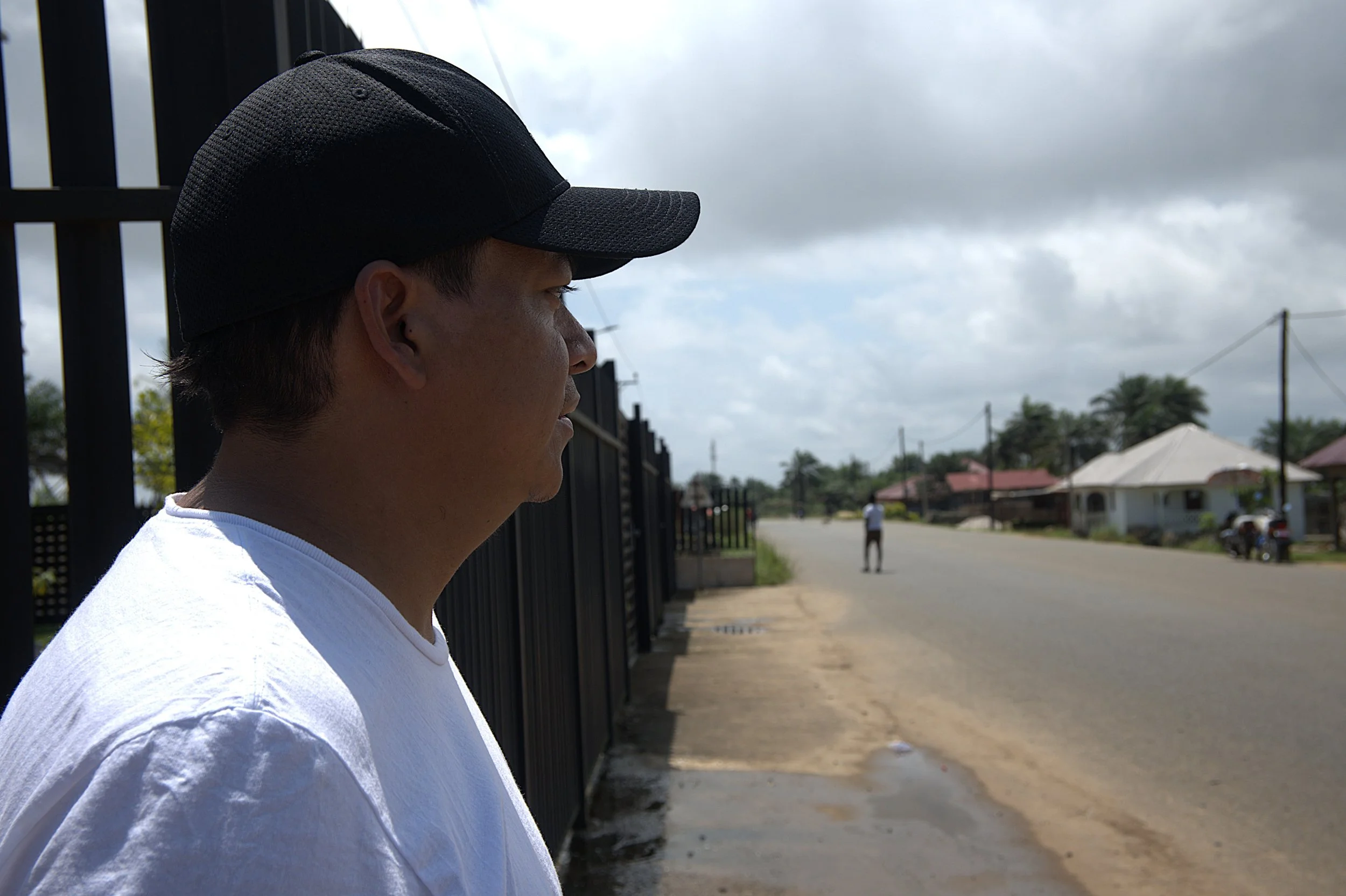
W., a Honduran deportee, stands by the main road outside the hotel in Marshall, Liberia. (Graziana Solano)
«I just sat there crying, wondering what had happened to the America I knew—the place where I felt safe to build a life with my children.» — W., Honduran deportee in Liberia
The passengers who refused to step off the plane in Liberia were subsequently flown to Equatorial Guinea. Among them was a Cuban man suffering from a severe ventral hernia. Human rights monitors have repeatedly warned of egregious abuses facing deportees routed to the Central African nation.
The initial bilateral agreement signed between Washington and Monrovia in September 2025 is currently facing a legal challenge in US federal court under UT v. Bondi—a lawsuit targeting Third Country Asylum Cooperation Agreements. US immigration law dictates that asylum seekers can only be transferred to a third country if that nation is demonstrably "safe" and maintains a robust, fair asylum system. A secondary agreement signed recently remains operational.
Savi Arvey, Director of Refugee and Immigrant Rights Policy at Human Rights First, stresses that Liberia has no functional capacity to process asylum claims. “This leaves people stranded in indefinite legal limbo or at severe risk of chain-refoulement—being bounced from one country to the next until they are ultimately pushed back into the danger they originally fled,” she says.
The Trump administration has poured over $40m (£31m) in taxpayer funds into securing these third-country deals, according to a February report by Democrats on the Senate Foreign Relations Committee. The pacts are shrouded in secrecy: terms are rarely published, and details regarding what host nations receive in exchange remain closely guarded.
The deals are typically secured through a mix of diplomatic threats and financial incentives—ranging from warnings of trade tariffs, visa bans, and aid freezes on one side, to promises of direct investment on the other. Liberia appears to be no exception.
Shortly after President Boakai’s government agreed last October to accept an expelled Salvadoran national, Washington extended US business and tourist visas for Liberian citizens from 12 to 36 months. By December, the two nations finalized a deal committing $124m in US funding to Liberia’s healthcare sector.
That same month, US-backed mining firm Ivanhoe Atlantic secured a $1.8bn, five-year concession to transport iron ore along Liberia’s rail corridor. A subsequent investigation by the New York Times revealed that the US State Department also agreed to transfer $5m directly to the Liberian government to cover logistics for third-country deportees—contradicting public claims by Liberian officials that the arrangement was undertaken strictly on "humanitarian grounds" without financial compensation.
Yael Schacher, Director for the Americas and Europe at Refugees International, describes the strategy as an opaque and corrupt instrument of foreign policy, operating with virtually no oversight on where US funds end up once agreements are signed.