“I’d Quit Tomorrow if I Could”: The Women Selling ‘Kush’ to Survive in Liberia
Experts warn that many women and young people are key links in the trafficking and sale of this synthetic drug, a highly addictive substance that is increasingly widespread across West Africa
This article was originally published in EL PAÍS, on July 11, 2025.
Evelyn (a pseudonym), 42, walks with a slow gait and weary eyes into a bar in Monrovia, the capital of Liberia. She is accompanied by a two-year-old girl she has cared for since birth—a child she says is always with her, even when she goes to sell kush in one of the city's 866 ghettos. This potent synthetic drug—a cocktail of nitazenes, synthetic opioids, and cannabinoids—reportedly first appeared in Sierra Leone around 2017. In just a few years, it has spread rapidly across several countries in West Africa, including Liberia, driven by its low cost and high addictiveness.
Evelyn is one of the last and most vulnerable links in the trafficking chain. “I started selling kush cigarettes in 2020,” she says. “One day, a woman already in the business came to me and said I would make more money selling kush than I did at my job back then. And that’s how I started,” she recalls.
Evelyn used to sell water on the city streets. “But I didn’t earn anything—plus, it was dangerous,” she says. The people—mostly women and children—who engage in this form of informal commerce work under a blazing sun by day and, at night, moving cautiously along dark streets barely illuminated by the headlights of cars and motorcycle taxis.
When asked how many hours a day she works, Evelyn says not to understand the question. To her, selling drugs is just "selling." It isn't a job as to her there is no dignity in it. Now, Evelyn sells kush from late afternoon until three in the morning. “Then, at six, I get up to get my children ready for school,” she says. “If I could, I would quit tomorrow. But I have no choice.”
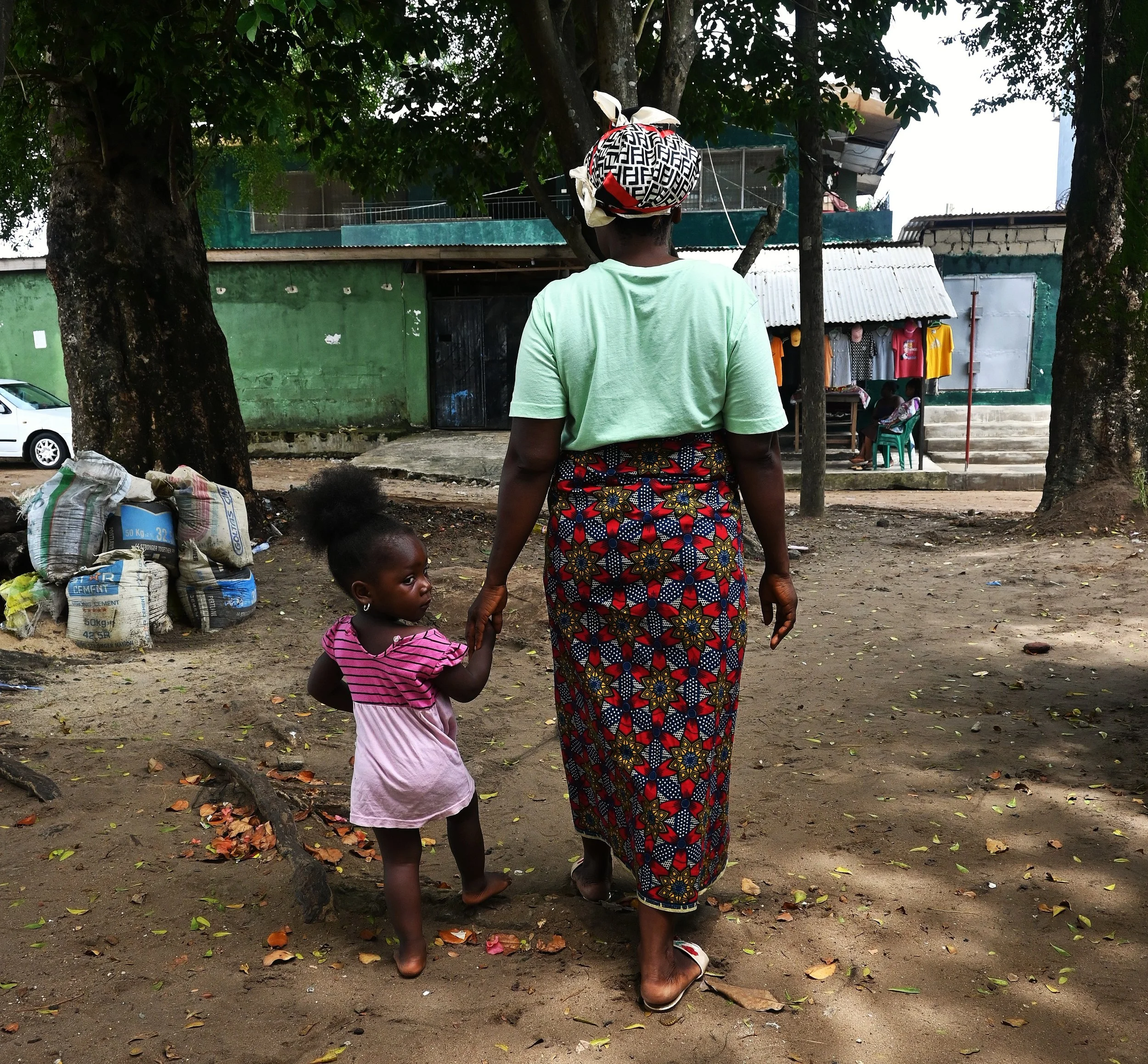
Evelyn walks through an alley in Monrovia, Liberia, with her adopted daughter. (Graziana Solano)
The proceeds from selling kush, she explains, are what allow her to keep her children in school, provide two meals a day, and occasionally cover the cost of medicine when they fall ill. “Poverty and the lack of jobs drive so many of us to this,” she says. “And there are so many women doing it.” In her experience, women are often the ones taking the initiative to move or sell the drug, simply to keep their families afloat. “We do it to survive,” she says. “Here, families often prioritize their sons’ education, so skilled employment is out of reach for us. I also tried finding work as a domestic worker, but it has been impossible.”
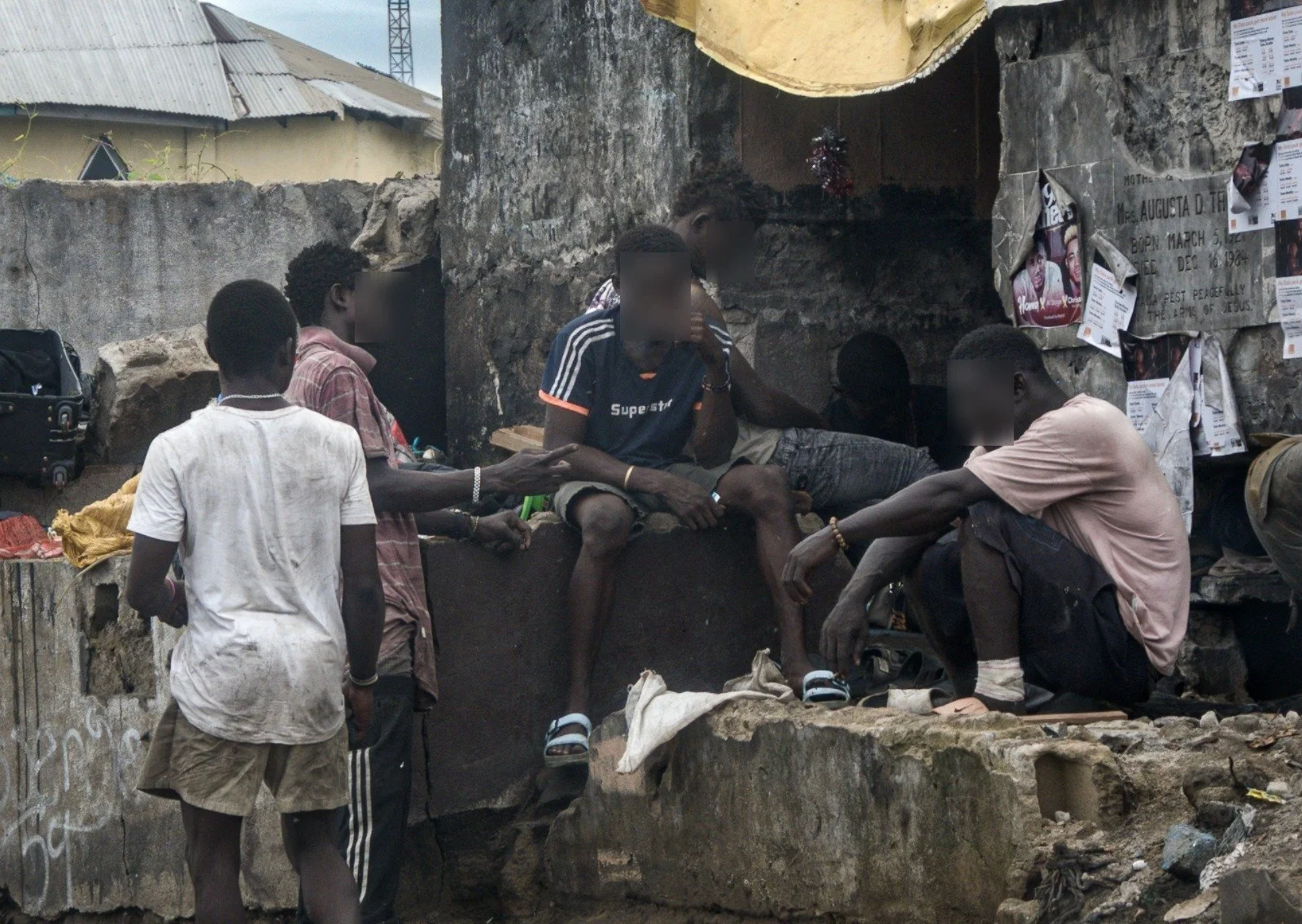
A group of young men smoking kush and other substances among the gravestones of Monrovia’s Central Cemetery, one of the city’s primary ghettos. (Graziana Solano)
Christian Ani, coordinator of the Improving Africa’s Response to Transnational Organized Crime (ENACT) program at the Institute for Security Studies (ISS), argues that women in West Africa are playing an increasingly active role in the kush trade, even as precise data remains elusive. “The lack of research on their role is mainly due to patriarchal bias,” Ani says. “Women are often seen as incapable of such illicit activities. But in reality, they are key players, and their numbers are growing.”
Ani noted that many women sell kush to supplement their income, benefiting from a society that underestimates them. Unlike men, they can often transport the drug across borders or through city markets unnoticed, hiding it among legitimate merchandise. “They pass through checkpoints without suspicion,” he adds.
In Liberia, a nation of 5.6 million, nearly half the population lives in multidimensional poverty—an indicator defined not just by a lack of money, but by a systemic struggle to access education, healthcare, and basic services. According to the World Food Programme, 8 percent of Liberians suffer from severe food insecurity.
The gender gap further deepens these hardships. In Liberia, women spend an average of just 3.4 years in school, roughly half the time their male counterparts do. This educational divide helps explain why 94 percent of Liberian women are relegated to the informal economy, leaving them with little presence in productive sectors and consistently lower earnings, according to a World Bank analysis.
« Thousands are estimated to have died from Kush in West Africa in the last three years. »
“There are many women in the ghetto,” Evelyn says. “I would have liked to study medicine and care for people, but the opportunity wasn’t there. I don’t want to hurt anyone, even if they say smoking kush makes them feel good,” she adds, her head bowed.
“They” are the more than 20 daily customers who buy her kush cigarettes for 100 Liberian dollars each—about 55 cents. Her clients include unemployed men and women, mostly between 15 and 30. To feed their addiction, the men usually steal phones or hawk scrap metal scavenged from Monrovia’s open-air dumps.
“Women often turn to sex work even for the price of a single cigarette,” Evelyn says. “In the ghetto, I see them go behind a wall with a man, then come back and hand me the money they just made, asking for kush. I never want that money. Sometimes I try to talk them out of it, but it’s no use. Once you start smoking, there is no easy way out.”
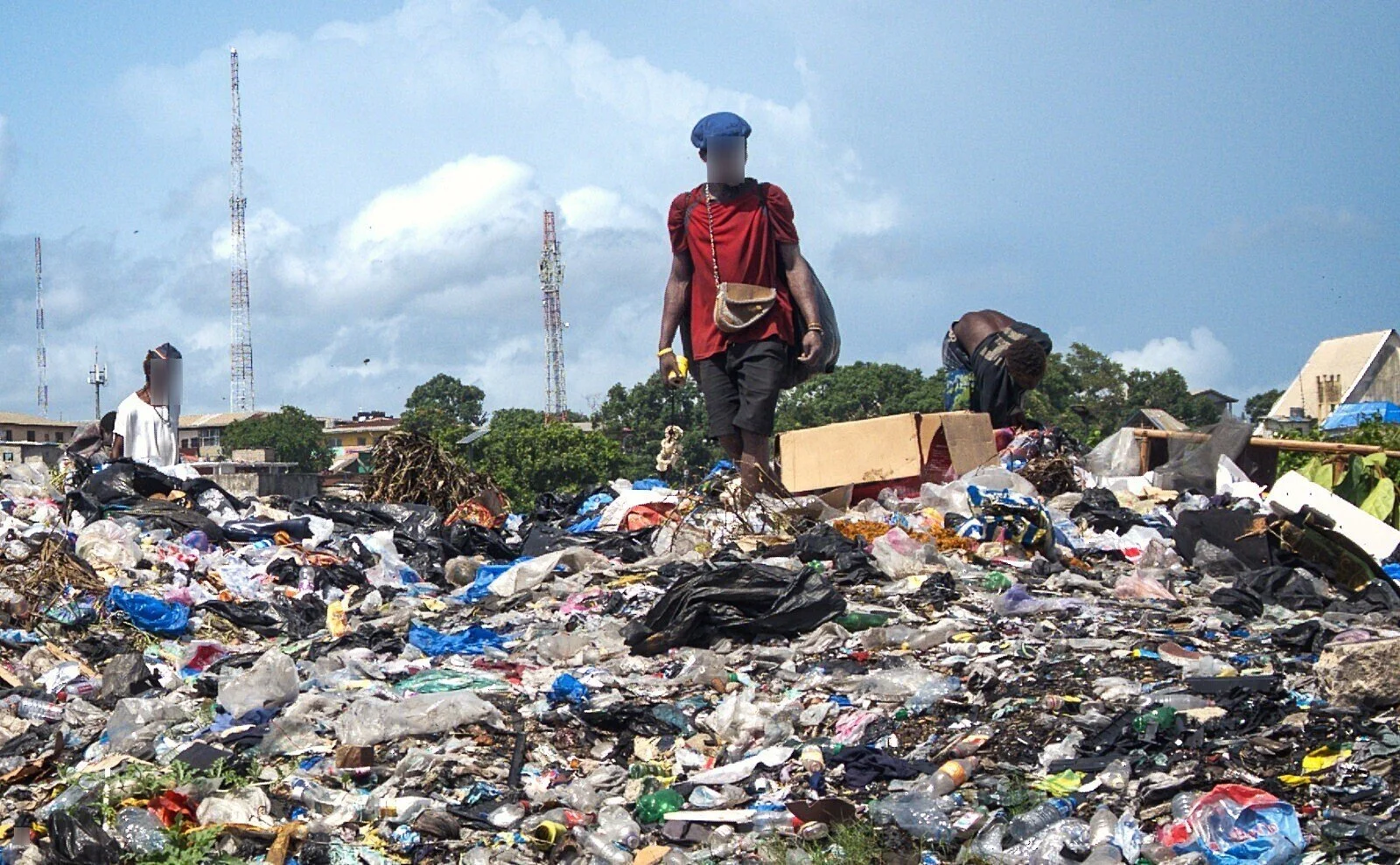
Young drug users scavenge through garbage accumulated on gravestones in Monrovia’s Central Cemetery, searching for waste to sell. (Graziana Solano)
Evelyn says she has seen several young people lose their lives to kush, even after smoking just one cigarette. “Ambulances? They don’t even come if you’re on the verge of death. They don’t have time for addicts,” she explains. “Those who smoke know the risks they take, but they keep using because it makes them forget, for a few moments, what their lives are like. Many are people traumatized by the violence and losses suffered during the war,” she adds.
Evelyn, too, lost a great deal during the civil wars that, between 1989 and 2003, claimed some 250,000 lives in her country. Among the dead were her parents, killed during the conflict. Research by Christian Ani for ENACT confirms that in Liberia, “gang culture and substance abuse are marked by the legacy of the civil wars and the prolonged failure of the state in the country after the conflict.”
Thousands are estimated to have died from kush in West Africa in the last three years. Since 2021, this synthetic drug has spread to other countries in the region, such as Guinea, Gambia, Guinea-Bissau, and Senegal. The problem has reached such a scale that, in 2024, the governments of Sierra Leone and Liberia declared a public health emergency due to high levels of consumption and deaths.
This year, the Liberian government allocated $800,000 to combat the kush epidemic, but Evelyn is skeptical. “The money meant for the people never reaches them,” she says. “Plus, the few rehabilitation centers available are prohibitively expensive, costing between $500 and $600 for a six-month program. Those who manage to go often end up right back in the ghettos, using again,” she explains.
After that first encounter at the bar, her phone went dark for days. A week later, a friend warns me that Evelyn had been arrested. Two weeks later, back at home, Evelyn recounts the ordeal. “They arrested me before my children’s eyes, right here, in front of my house. They forced me to hand over all my money. I’m broke now.” Such incidents, she says, have become weekly occurrences as targeted raids and corruption by the LDEA have intensified since President Joseph Boakai took office in late 2023.
After that first encounter at the bar, Evelyn's phone went dark for days. A week later, a friend sent word that she had been arrested.
“When they arrested me, it was morning. A car pulled up, and a group of officers jumped out, slapped me, threw me in inside.” Evelyn says. “Once at their offices, I was slapped and beaten with a stick across my back, legs, and head. They told me to hand over the kush and all my money if I didn’t want to end up in court. They knew I’d give them everything without a word—I don’t have the money for a legal defense.”
According to Evelyn, the abuse often turned invasive. She alleges that female officers even inserted fingers into her vaginal canal to check for hidden drugs.
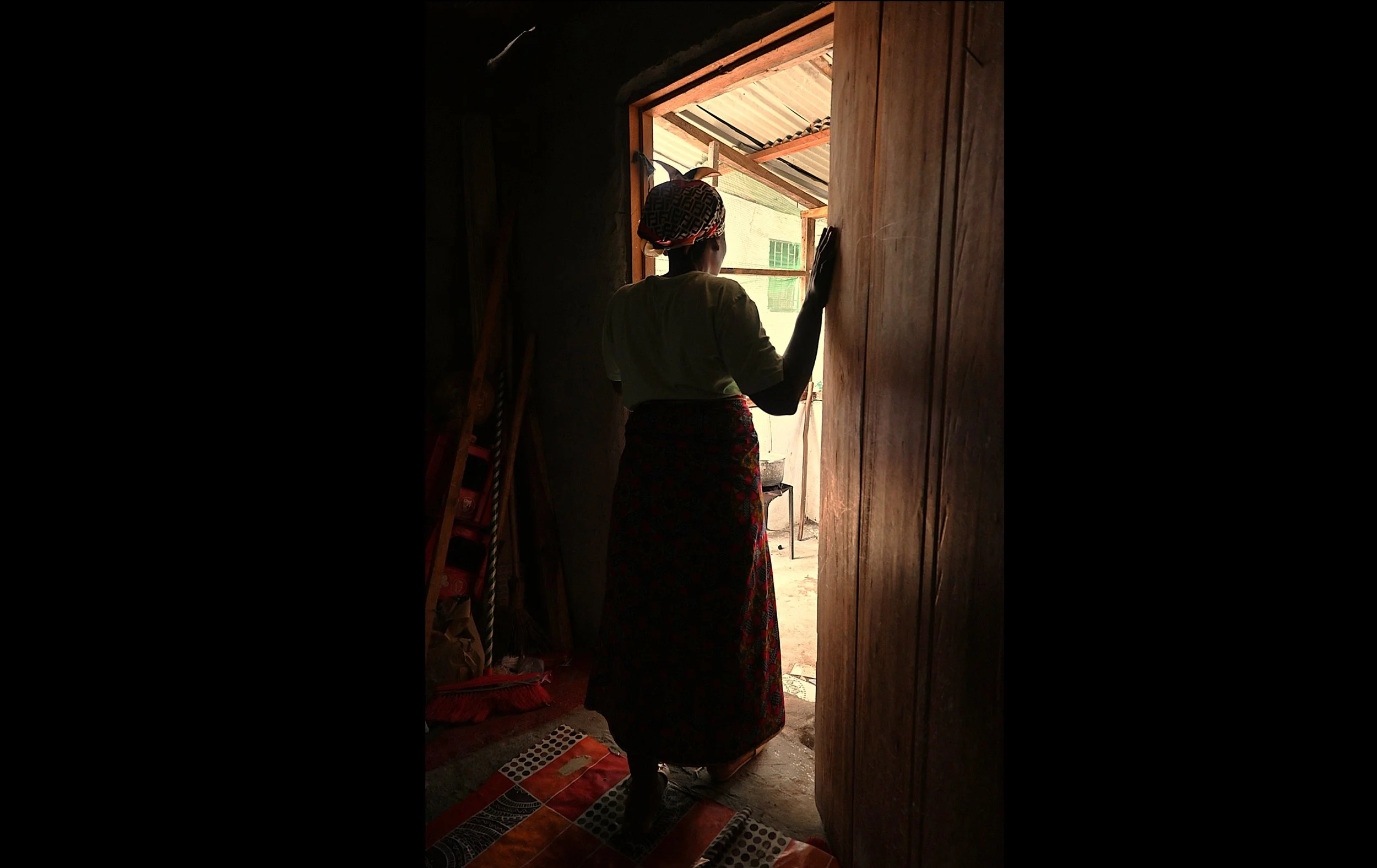
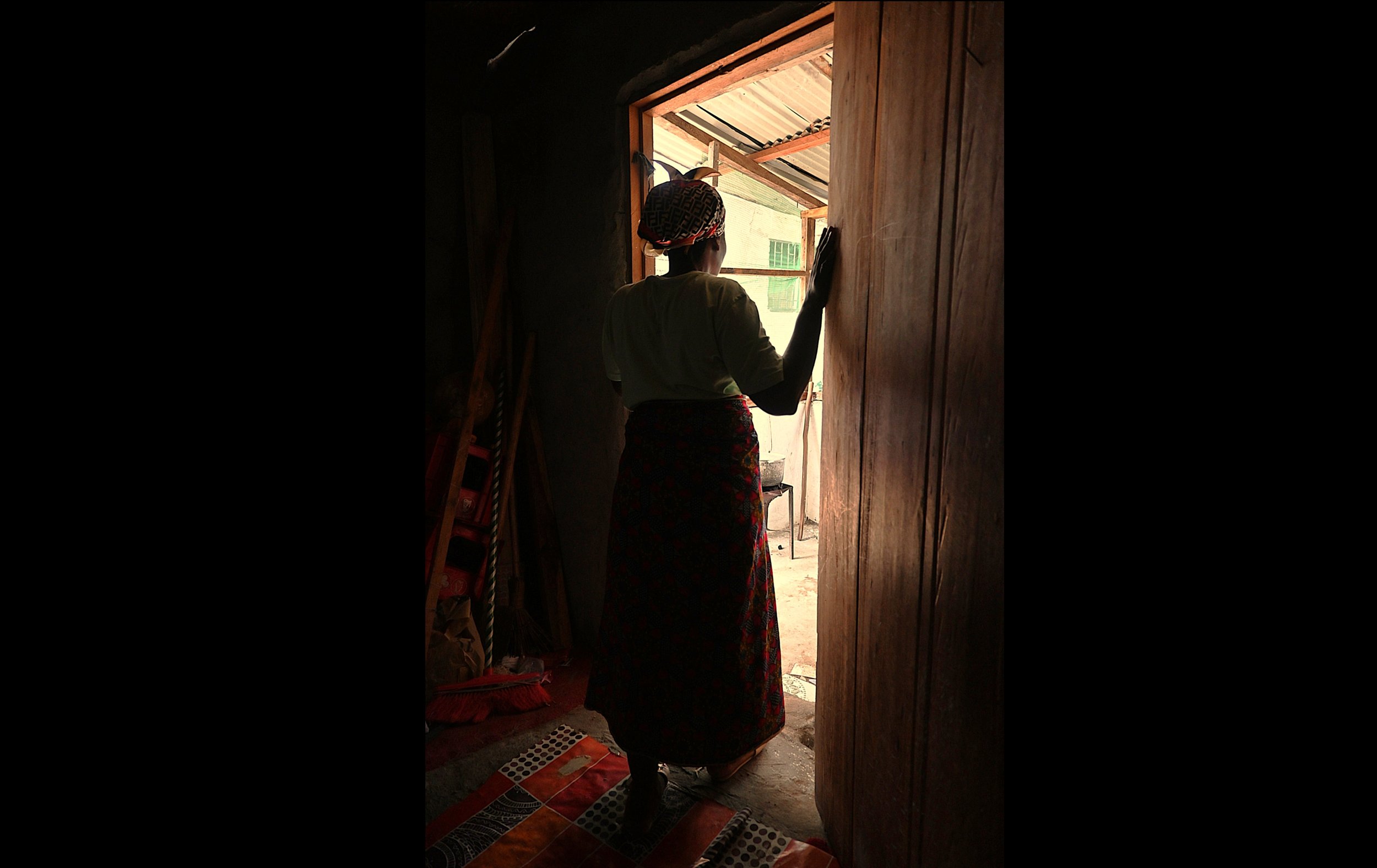
Evelyn stands at the door of her home a few days after being beaten and released from LDEA custody. She reports widespread pain and bruising across her body. (Graziana Solano)
For the investigation Ani coordinated in 2024, he interviewed the then-head of Liberia’s Drug Enforcement Agency. “Shortly after, we read in the newspapers that he was involved in the kush trade,” Ani says. “It wasn't a surprise. Corruption in countries like Liberia is so pervasive that it touches every level of society, fueled by widespread judicial impunity. Furthermore, agents are often so poorly paid that they seek profits elsewhere.
Ani adds that some LDEA agents also operate within prisons or through contacts in West Point, one of Monrovia’s most impoverished neighborhoods and a primary hub for the country's drug trade. “They resell seized drugs to local contacts and take a cut of the profits,” he explains. “There must be an international commitment to counter this. For some countries, it is impossible to face this alone.” Liberia ranks 135th out of 180 countries on Transparency International’s Corruption Perceptions Index.
Now, Evelyn says she is too afraid to return to the ghetto; she wants to stay home for a while, where it is safe. “I don’t know what I’ll do,” she says, as she braids her daughter’s hair. “I don’t see a solution.”
« Once at their offices, I was slapped and beaten with a stick across my back, legs, and head. They told me to hand over the kush and all my money if I didn’t want to end up in court. »
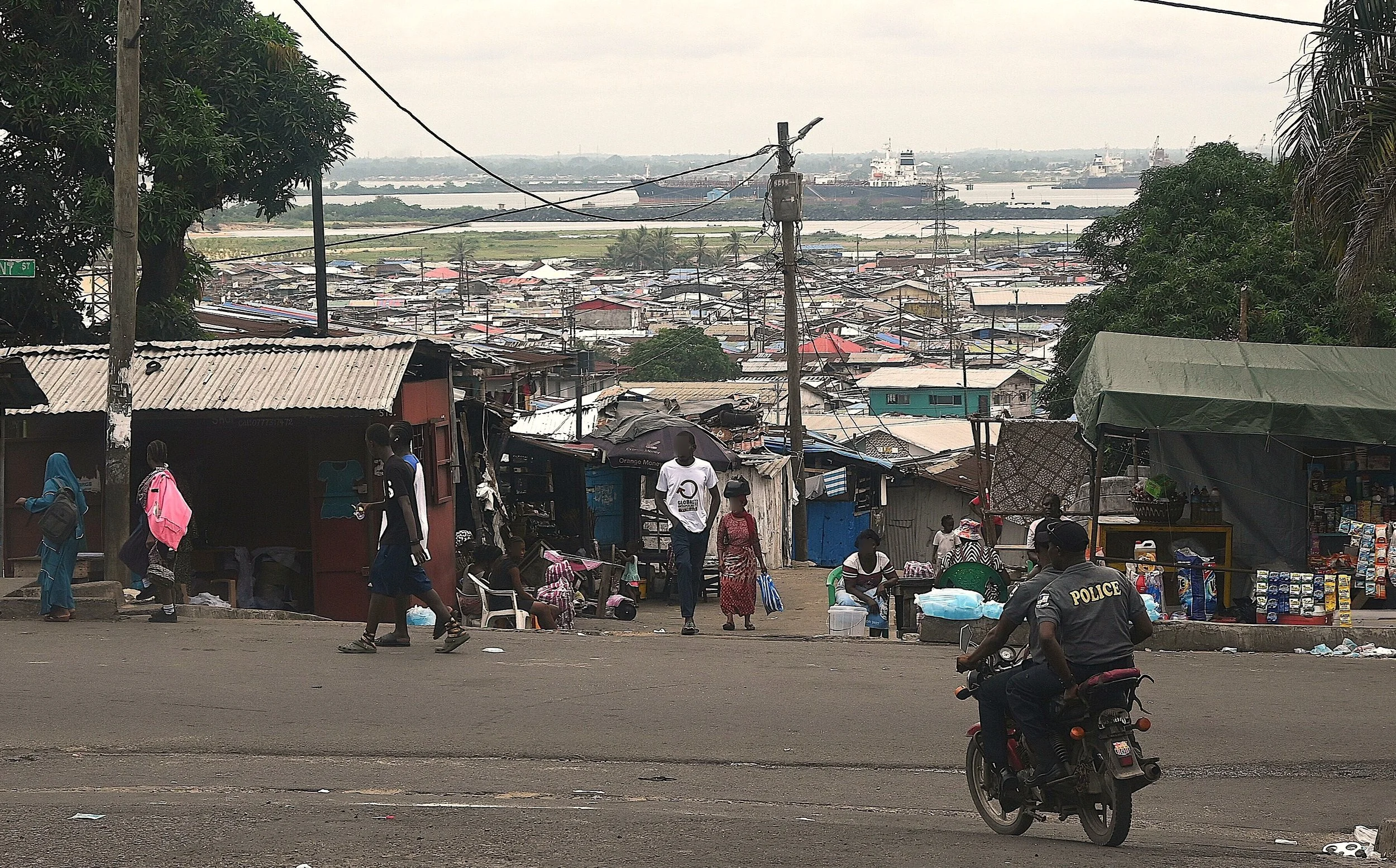
The entrance to the West Point neighborhood in Monrovia, a major drug hub for both the city and the country. (Graziana Solano)