Trump Administration Cuts Leave Liberia’s Health System on the Brink
The sub-Saharan nation relies on external funding for nearly half of its healthcare spending, with the majority provided by the United States.
This article was originally published in EL PAÍS, on April 7, 2025.
_____________________
“My name is Mustapha Fumba. I am Liberian, and like all Liberians, I believe in self-reliance. I know that one way or another, I will find a way to cure my son.” This is how he introduces himself, his eyes shining with pride, his tone cautiously confident.
He and his wife, Ruth, have been at the John F. Kennedy Memorial Hospital in Monrovia, the Liberian capital, since March 11, the day they rushed their two-year-old child to the emergency room. When they arrived, their son had suffered a stroke. “He couldn’t move one arm, he wouldn’t open his eyes, he couldn’t hold his head up,” Fumba recalls.
A week after admission, the boy was diagnosed with extrapulmonary tuberculosis. But the diagnosis was only half the battle. “The hospital had run out of tuberculosis medication. We had to wait almost two weeks,” Fumba says.
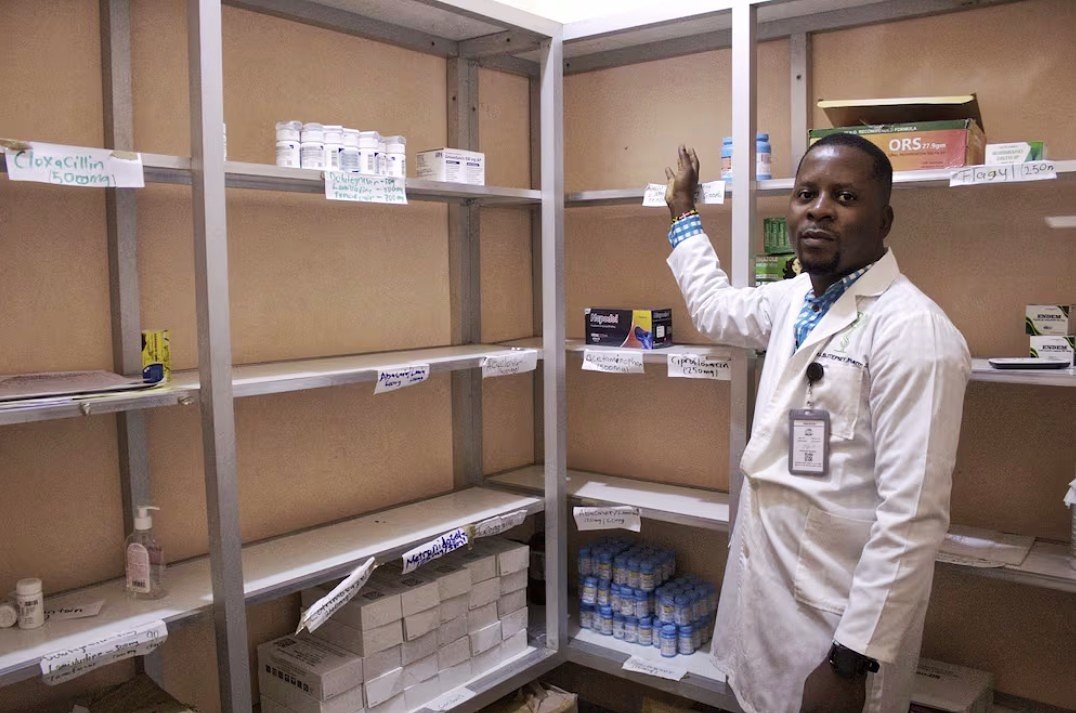
The pharmacy at JFK Hospital was supposed to be restocked by the United States Agency for International Development (USAID) in February. However, the Trump administration’s decision to freeze agency funding meant that by mid-March, the shelves of the infectious diseases unit were virtually empty, as was the hospital’s central warehouse. While these medications have been supplied to Liberia primarily by the Global Fund since the 2000s, their distribution depends entirely on USAID’s logistical network.
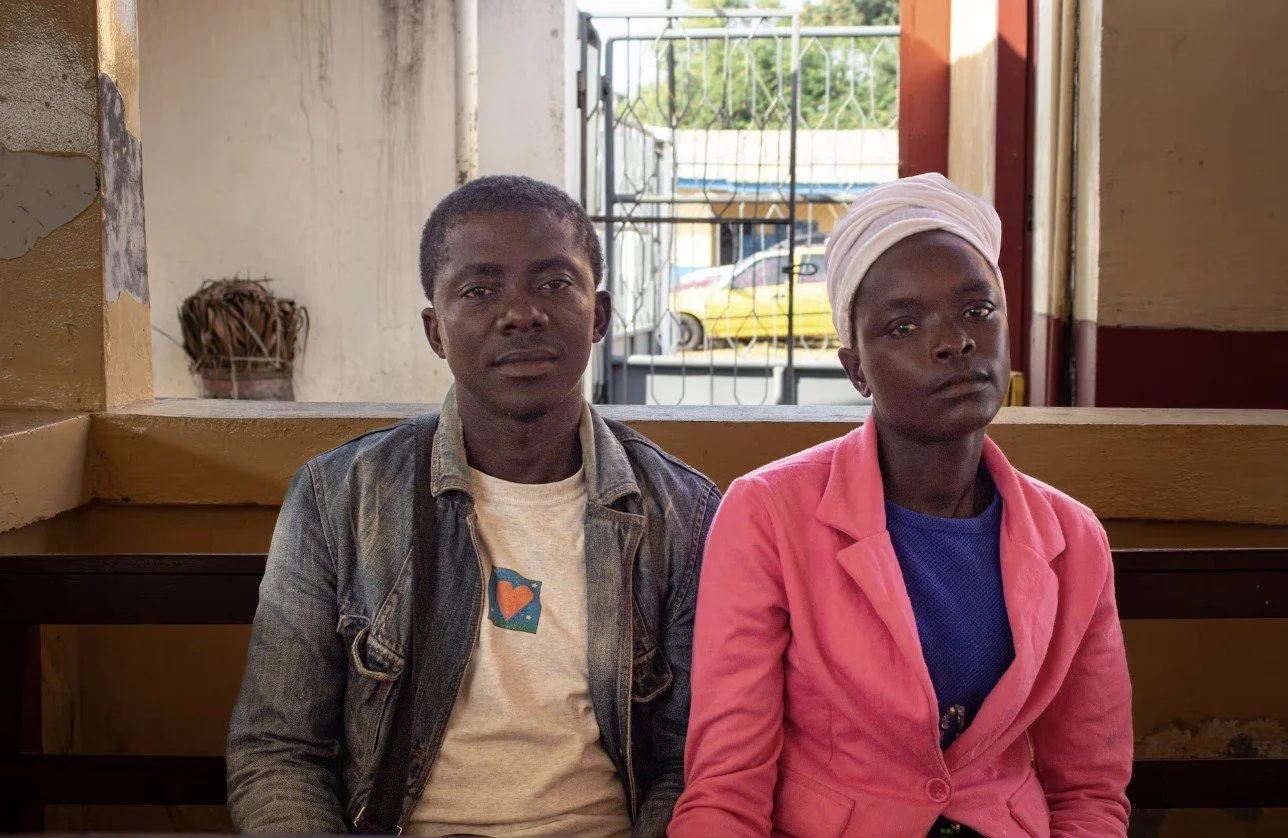
Mustapha Fumba and his wife, Ruth, at the JF Kennedy hospital in Monrovia (Liberia), where their son, sick with tuberculosis, is hospitalized. (Graziana Solano)
Only at the end of last month, in the absence of U.S. aid, was the Liberian government able to fund a temporary, partial restocking—guaranteeing the hospital a supply of vital drugs for roughly thirty days. This stopgap measure, however, has not reached facilities across the country, leaving many rural health centers empty-handed.
Fumba's son opened his eyes again a few days ago. “It’s the only improvement I see. His eyes are open,” his father says. Fumba fears his son’s limited recovery is the direct result of the delayed treatment. When the boy was admitted, the facility lacked not only medication but also diagnostic tests; doctors administered general antibiotics as a desperate placeholder. Nearly two weeks passed before the hospital received a temporary supply and the boy could begin the correct regimen. Now, even as he begins to recover, no one can say how long the medication will last.
The dismantling of USAID—which, according to Finance Minister Augustine Ngafua, has resulted in the freezing of $51 million in grants—is a major blow to Liberia’s already fragile healthcare system.
“A few days ago, the government guaranteed us coverage for perhaps a month, supplying us with the medications that had been blocked in the central warehouse. We don’t know what will happen after that,” explains Emmanuel Tamba, the hospital’s director. “What they gave us was already in the country, but once it runs out, we will have nothing left.”
“The United States had said that the supply would resume, but everything is still at a standstill,” he continues. “My daughters all live in the United States. I also lived there for many years. I love the United States; I didn’t expect such a blow from a long-standing ally.”
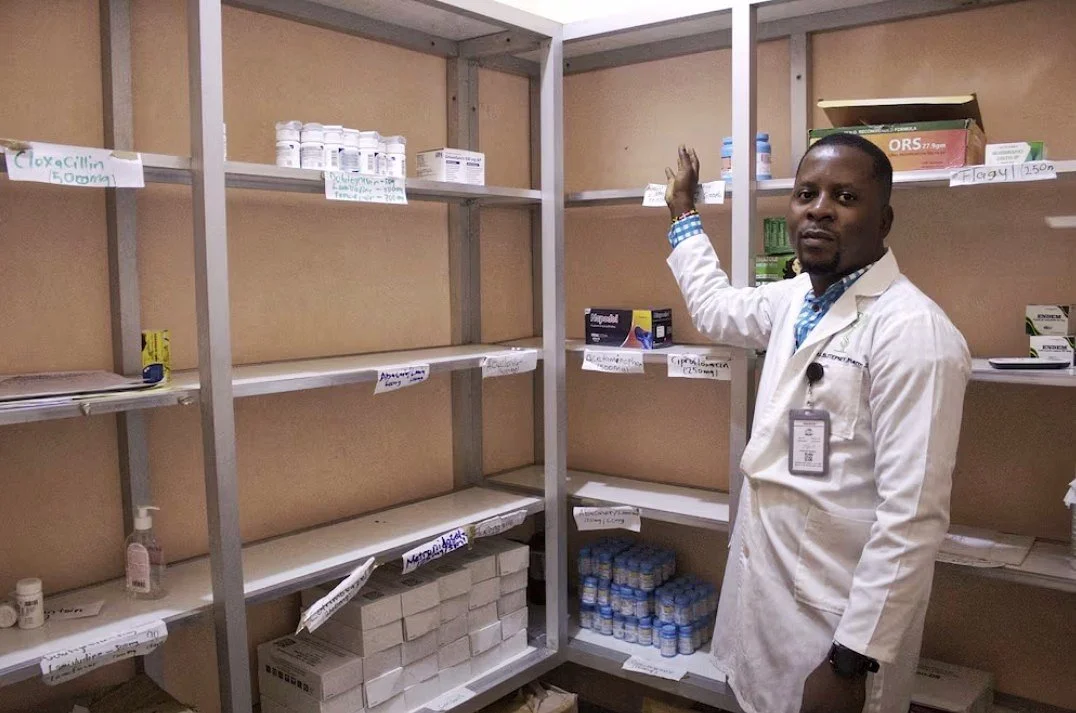
Lawrence Stepney, chief pharmacy officer at the John F. Kennedy Memorial Medical Center, stands before empty shelves in the infectious disease pharmacy, on March 14, 2025 (Graziana Solano)
When the JFK Hospital was designed in 1961, the project received $18 million in U.S. funding, including loans and grants, and a $1 million contribution from the Liberian government. It is still considered by locals to be the country's premier hospital and a symbol of the U.S.-Liberian partnership in healthcare.
« The United States has said that the supply would resume, but everything is still at a standstill. »
USAID has invested more than $3 billion in humanitarian, development, and health programs in Liberia, as noted by Ambulai Johnson, founder and director of the Center for Advancing Health Systems Innovations, in an article for the local newspaper FrontPage Africa. In total, according to Johnson, Liberia relies on external funding to cover 47 percent of its health spending—primarily from the United States, which, until the Trump administration's decision, was the country's largest bilateral donor. "Without these funds," Johnson warns, "hospitals will close, supply chains will be disrupted, and life-saving programs will cease."
Tamba elaborates on the potential consequences: "If the USAID supply system is not restored, there will be a surge in HIV cases here in the city, malaria in rural areas, and tuberculosis across the country. There will be many preventable deaths."
Of the 26 poorest countries in the world, the Center for Global Development (CGD) has identified eight where more than a fifth of all aid comes from the U.S. agency. These nations are expected to suffer the harshest effects of the funding freeze. Liberia—where basic healthcare is the sector most dependent on USAID—is part of this group, alongside South Sudan, Somalia, the Democratic Republic of Congo, Afghanistan, Sudan, Uganda, and Ethiopia.
« If the USAID supply system is not restored, there will be a surge in HIV cases here in the city, malaria in rural areas, and tuberculosis across the country. There will be many preventable deaths. »
In Liberia’s rural interior, where the healthcare infrastructure was already fragile, the situation has reached a breaking point. Jesse Cole, director of the Liberian human rights NGO DELTA, notes that the crisis is ripple-effecting across the nation. “Large hospitals in rural areas have begun diverting patients to JFK in Monrovia because they can no longer treat them,” Cole says.
“We have already seen deaths. Partially restocking the country’s main hospital is a drop in the ocean,” he explains. “If the government does not develop a strategy to compensate for the abrupt withdrawal of USAID projects, the consequences will be tragic.”
For the past decade, the USAID Global Health Supply Chain (GHSC) program has not only supplied drugs but monitored their distribution to combat the endemic theft and resale of medical supplies. Despite these efforts, research published last year revealed a staggering reality: nearly 90 percent of local pharmacies were selling medicines donated by international partners—supplies that were intended to be distributed to the poor free of charge.
Cole argues that local corruption, often left unpunished by a weak and complicit judicial system, has long undermined the effectiveness of foreign aid. “Without USAID-funded oversight, corruption will run rampant,” he laments. “Citizens are dying from minor illnesses, and families are being forced to pay exorbitant prices for medical care in a system that is now completely unchecked.”
« Without USAID-funded oversight, corruption will run rampant. Families are being forced to pay exorbitant prices for medical care. »
The dismantling of USAID is also a blow to the labor market. Approximately 10,000 Liberian people who worked for NGOs supported by the agency have been laid off. “This has a significant impact on families and their incomes,” Cole explains. “And because it affects their earnings, it ripples through the entire economy, stripping away the purchasing power of thousands.”
Meanwhile, Fumba and his wife continue to spend their nights at the hospital. As they have for weeks, she sleeps beside her son while he takes his place on a bench outside, joined by other parents hoping this crisis does not turn into a disaster.