The Hidden Toll of Clandestine
Abortions in Rural Liberia
As a silent epidemic of unsafe abortions claims lives across rural Liberia, a broken healthcare system plagued by corruption and the resale of donated medicines leaves the country’s most vulnerable women with no choice but to risk everything in the shadows.
This article was originally published in The Post Internazionale, on July 12, 2024
“ ‘If you want to buy a cassava stalk, you have to bring a chicken or a bag of rice’—that’s what I had been told, because at the time, that was how it was done. I was twenty-five years old, I didn’t want that baby, so I brought them the chicken and in exchange I had the stalk. I put it inside, then I pushed it up, hard, and I kept it there all day. I almost bled to death, but in the end I had my abortion. It was twins.”
Mango season has recently begun in Liberia; it is April and the sky does not have a single snag. In Palala, a small rural village in Bong County, in the north-central area of the country, 58-year-old Nowaii Kaiser sits under the shade of a tree while the five o'clock light rests on her cheeks like a patina of gold. She survived her clandestine abortion. When her daughter later tried the same on her own, they didn't make it to the hospital in time.
In Liberia, clandestine abortions are a silent but constant epidemic, especially among the youngest. “With my NGO, we go into the schools, into the villages. We talk to the girls. We want them aware, informed,” Kaiser says. “But they will be free women only when access to safe abortion, in my country, is a right for everyone.” Under the previous George Weah government, the bill to expand abortion rights had remained blocked in the Senate, “but at least we had reached that point,” she says. “Now with Boakai, we have to start everything all over again.”
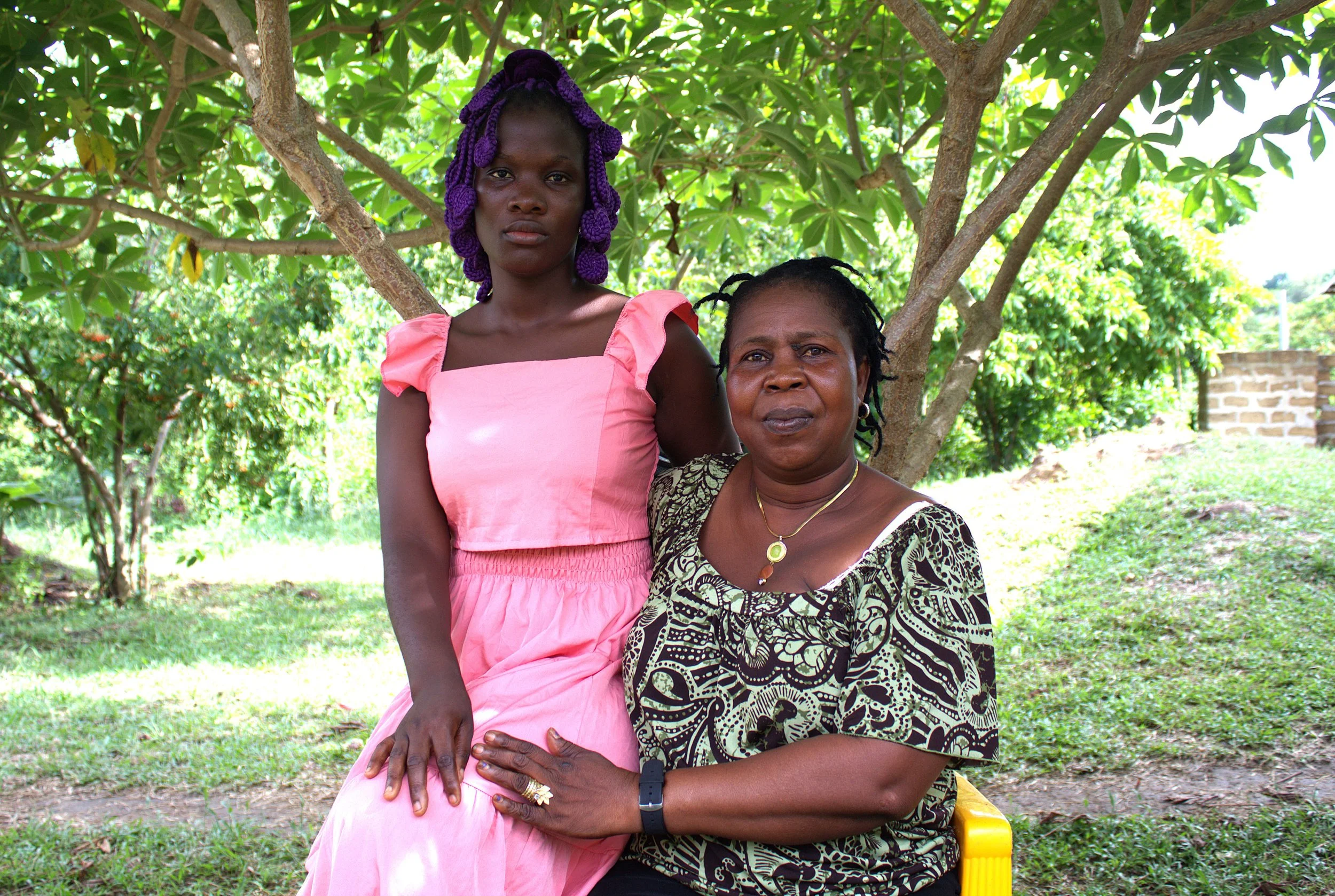
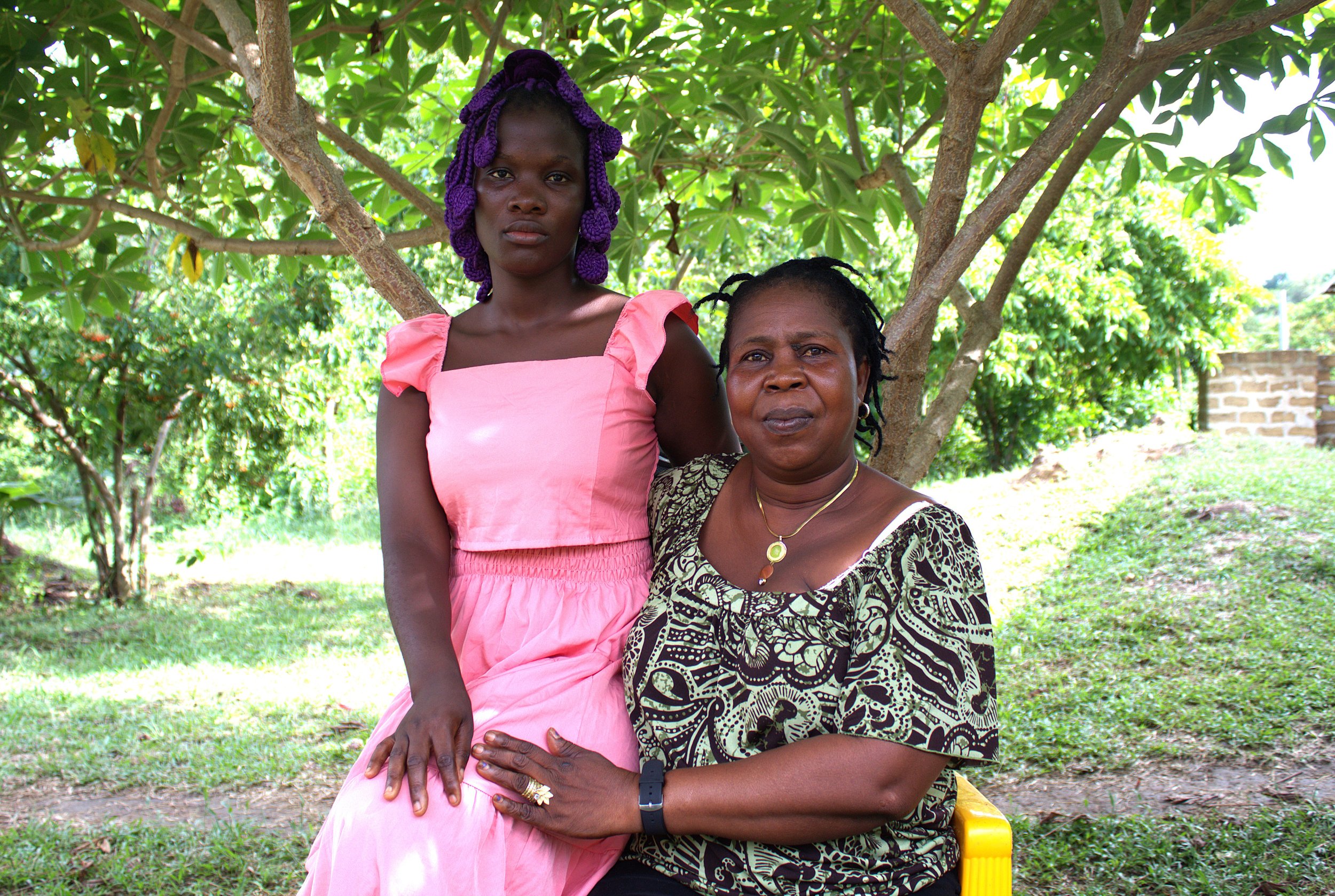
Nowaii Kaiser, 58, right, at the headquarters of Rural Women Rights Structure, the NGO she founded in 2008. To her left is Hannah Kerkulah, 25, a survivor of a self-induced abortion who now supports Kaiser’s mission by leading awareness campaigns in her local schools. (Graziana Solano).
A Brighter Future
When her daughter died, she was fifteen, nearly sixteen. “I didn’t know she was pregnant. She kept it hidden from us out of fear, out of shame,” Kaiser says. In Liberia, for a young girl to become pregnant out of wedlock means only one thing: keep it secret and do everything possible to get rid of the pregnancy as quickly as possible, or face exile from family and society alike. “The stigma here is very strong, but if I had known, I would have helped her. By the time we brought her to the hospital, it was too late.” The “RPG,” a chemical compound that is often fatal, had torn through everything inside her. To induce an abortion, one simply pushes it up the vaginal canal like a small nut. In the end, you just hope not to bleed until your own life is gone, too.
“We all know someone who lies underground,” first appeared in 2011 in the pages of And Still Peace Did Not Come: A Memoir of Reconciliation by Liberian journalist Agnes Kamara-Umunna. Eight years earlier, Liberia had finished fighting its second civil war, but it had not finished counting its dead. “I saw with my own eyes what happened to women during the war. I saw what happened to women who wanted to leave their husbands. I thought of my late mother, and I told myself I had to raise my voice for women’s rights.” Kaiser stares straight ahead; she pauses, and her eyes suddenly well up.
“I taught social studies in elementary school for many years, but the classroom wasn't enough. I told myself I had to do more, to meet other women who, like me, want a brighter future. Is there anyone speaking for us, telling the truth? I asked myself. So, I resigned and left the school.” In 2008, Kaiser founded the Rural Women’s Rights Structure (RWRS), a cornerstone for women in the rural areas of Bong County and now in neighboring Nimba, another of the country’s fifteen counties where her NGO has recently expanded.
The road leading from the capital, Monrovia, to Gbarnga, the seat of Bong County, is one of the rare stretches where Liberia’s red earth has been supplanted by a ribbon of asphalt—in this case, 198 kilometers long. Along the roadside, a dense, always-green landscape of oil palms, papaya, rubber, and kapok trees rises up. Then, suddenly, there is the bustle of women in the street markets; weaving through cars and motorbike taxis with small children in tow, they move day and night, selling water, plantain chips, and ears of corn for just a few dollars a month: a world that has remained frozen in time since the end of the war, but where one survives only by staying in constant motion.
About twenty minutes past Gbarnga lies Palala, the small rural village where Kaiser was born and raised, and where she eventually founded her NGO. “There are about twenty of us; we work with women’s groups on economic empowerment, political participation, and gender-based violence awareness—and the men are involved, too. If they want to free their daughters, they must start by seeing their wives as free,” Kaiser explains. In the twenty-five schools where they operate, RWRS staff meet with teachers and students to discuss sexual and reproductive health and prevention—topics that are almost entirely absent in this country. “Young people are constantly having unprotected sex, and most of the time, they don’t even know the consequences. They find themselves facing a pregnancy and get rid of it by the first means possible. There are girls as young as eight or twelve who experience sexual abuse within their own homes, but these are things that remain unspoken.
Bong County, in Liberia’s north-central region, is one of the country’s most populous provinces, yet it suffers from a chronic lack of healthcare infrastructure. While a main road connects the area to Monrovia, 198 kilometers away, many rural residents remain hours from the nearest health facility—a gap that widens during the rainy season, when roads become impassable mires of mud.
Palala, the rural village where Nowaii Kaiser and Hannah Kerkulah reside, is located about 21 kilometers outside of Gbarnga, capital of Bong County. It is here where their advocacy work began.
Under Liberia’s current law, enacted in 1976, abortion is a crime punishable by up to five years in prison. It is permitted only in cases of rape, incest, or when the fetus has life-threatening anomalies, or to save the life or the physical and mental health of the mother.
Last year, under the administration of former President George Weah, an amendment to the sexual and reproductive health rights section of a new public health bill reached the Senate, only to be stalled. Its passage would have led, among other things, to a broad expansion of abortion rights, effectively removing the existing restrictions.
According to local sources, the health minister of the new Boakai administration, Louise Kpoto, could provide a more liberal push for the country. This move is encouraged in part by international pressure to bring Liberia in line with recent World Health Organization (WHO) guidelines regarding women’s sexual and reproductive health rights. “I have high hopes for the new government,” Ms. Kaiser says. “It is a step that must be taken. There is no more time.”
The Law of Impunity
Hannah Kerkulah is 25 years old, with deep, speaking eyes. Like Kaiser, she is from Palala, and she says she owes everything to her. “When I was fourteen, I had an abortion using a cassava stalk and I nearly died. Yes, I was afraid; I lost so much blood and then I felt cold.” Hannah’s words come in a rush, delivered in a voice that is at times thin, at others sharp. “Then I met Kaiser and joined her organization.” From that moment on, Hannah promised herself she would visit schools and meet girls her own age to help them find their voice. And that is exactly what she has done.
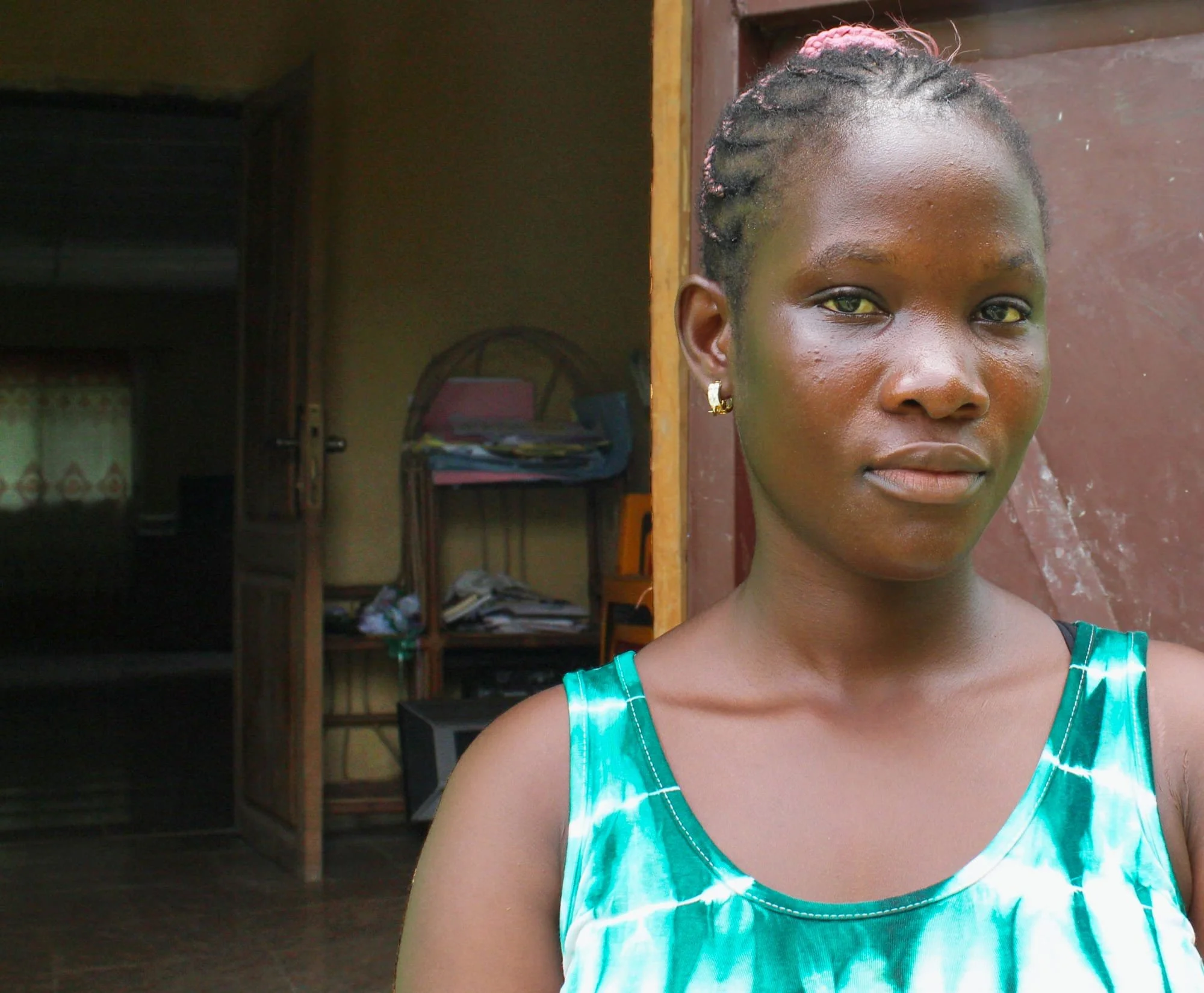
Hannah Kerkulah, 25. After nearly dying in a school bathroom following a self-induced abortion, she joined forces with Kaiser to raise awareness and provide sexual education to young people. (Graziana Solano)
Every one of my friends has had at least one clandestine abortion. Some have swallowed crushed glass; others, like me, used a cassava stalk,” she says. “And yes, there are those who have used the RPG,” she admits in a whisper. The word “RPG” is identical to the name of the rocket-propelled grenade launcher—the same weapon that caused thousands of deaths during Liberia’s two civil wars. For locals, it is a word spoken softly, often with a bowed head. The reference to the Soviet weapon becomes a vivid illustration of what happens once the abortive compound is inserted into the vaginal canal. “Some survive but can no longer have children, and others die,” Hannah explains. “But getting an RPG costs much less than going to a clinic.”
Although the current law permits abortion only in cases of incest or rape, the reality of daily life in the country is a completely different story. “Yes, it’s true, there are clinics in Liberia that perform safe abortions illegally,” Kaiser confesses bitterly. “The only thing they care about is that you have the money to pay for it. So, only the women who can afford it have access to a safe abortion, and they are few. In rural areas, there are none.” And Liberia is a largely rural country. Most of the time, those who want an abortion cannot afford the 3,000 Liberian dollars (about 15 U.S. dollars) to pay a clinic for a safe procedure; if they have that money, they use it to feed themselves, considering that the country’s average annual salary in 2022 was around 130,000 Liberian dollars (about 680 U.S. dollars). Instead, they ask a friend who has done it before for advice, and they induce the abortion on their own. “Of course the government knows—everyone knows—but they pretend not to see,” Kaiser explains.
Kaiser’s project is part of the Amplifying Rights Network, a local coalition of eleven NGOs working in the field of sexual and reproductive rights for Liberian women. The coalition is funded by Sweden, the source of the grants that allow Kaiser’s NGO to exist today. According to local press sources, without the pressure and awareness campaigns promoted by international partners like Sweden, the conversation around safe abortion, prevention, and sexual education in Liberia would be non-existent.
Over the years, the local community has come to know the work of the RWRS. “They come here for information, and when we can, we help them by providing contraceptives and safe abortion pills,” Kaiser says. The funds arrive, but they are not enough, she admits. Consequently, alongside the produce from her land, she says she is forced to sell pharmaceutical products that were intended for donation. She knows it is illegal, but she maintains that the proceeds help her pay her staff. “I sell them at half the price of the pharmacies, and if a girl can’t afford it, I give them to her for free. I want to be helpful, but I can only help if I can keep the project standing.”
The sale of donated drugs is a chronic phenomenon in Liberia, a country with one of the highest corruption rates in the world. In late April, Jim Wright, director of the USAID Mission in Liberia, stated that nearly 90 percent of Liberian pharmacies resell medicines donated by international partners such as the United States and the European Union, which should instead be distributed free of charge. After some local pharmacies threatened to sue the American agency, total silence fell over the issue within days. However, local sources suggest this is happening to allow USAID to investigate the matter thoroughly without local pressure.
With over 460,000 inhabitants, Bong is the third most populous county in Liberia, yet it is also an area where reaching a hospital in an emergency is often impossible. Victor (a pseudonym), a local healthcare worker, explains how “the funds and materials that arrive in the country are not used as they should be. I’m not surprised by the USAID statement; I see these things every day,” he says. It is an endemic problem—both the corruption and the total impunity that follows—and in rural areas, the consequences are tragic. “There are only two obstetricians in the entire county, only two ambulances that often lack the fuel to be used, and a shortage of drugs, contraceptives, and medical supplies for post-abortion complications.”
This also happens at Phebe Hospital, the region's primary medical center, Toe says. “The drugs arrive, and some nurses and doctors steal them and resell them.” At times, entire trucks filled with medical supplies have vanished. “Sometimes patients could be saved if the medicines stayed here, but they end up having to pay, and they can’t.” Among them are girls who arrive at the hospital on the brink of death. “Even the morning-after pill is almost never available; they could have it for free, but it ends up being sold elsewhere. It hurts deeply. You invest your time, but you can’t give people the help they deserve.”
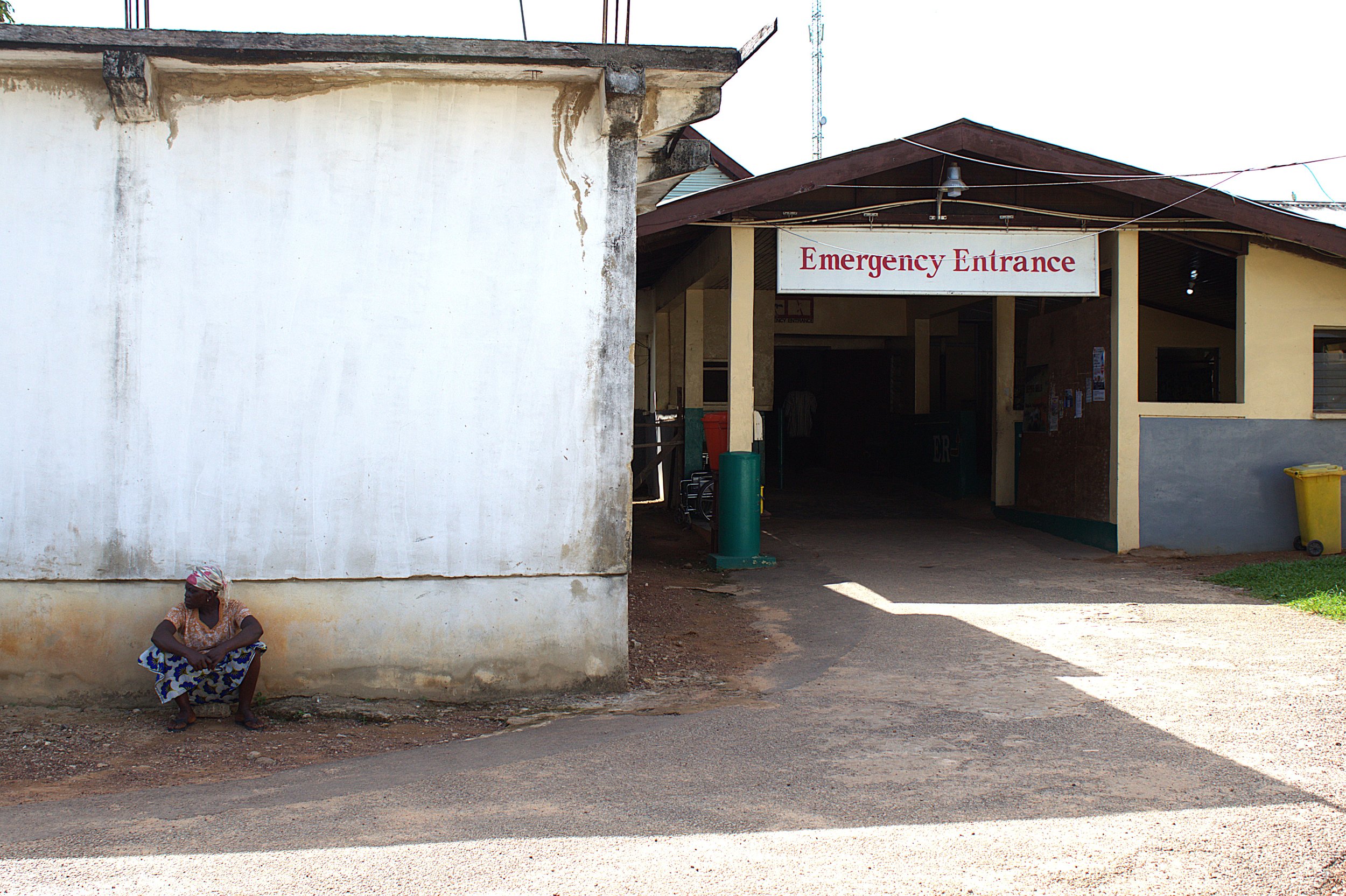
The emergency room entrance at Phebe Hospital in Gbarnga. While it is the central referral hospital for all of Bong County, it remains difficult to reach for much of the province’s population. (Graziana Solano)
Phebe Hospital is one of the facilities monitored by Siah Sam, the Community Engagement & Research coordinator for Community Health Education & Social Services in Liberia (CHESS). Along with about twenty other local clinics and hospitals, Sam’s task is to ensure that donated medications remain where they are intended. From her observations at Phebe Hospital, everything is proceeding as planned. Yet, according to Toe’s account, the monitoring system at CHESS—which is itself funded by USAID—appears to be riddled with holes.
“But we have our own problems, too. I received my February pay at the beginning of April. How are we supposed to feed our families? Many people feel forced to do things like this,” Toe says, his expression darkening. The testimonies from Toe and Kaiser regarding the sale of donated drugs trace a line of demarcation in a country struggling just to make it to the end of the day: a divide between those who act illicitly to survive and those in the upper echelons who steal for the sake of theft. The Minister of Health has pledged to end this impunity by prosecuting anyone involved, and although skepticism is widespread, hope among Liberians remains alive.
Two Truths
According to the first national study on abortion in Liberia—which has never been published in full—there were over 38,000 elective abortions between September 2021 and March 2022. This figure, however, refers only to cases recorded within healthcare facilities. “No one knows how many die at home after a clandestine abortion, but there are many,” Toe explains. “Reaching a hospital often means walking for three or four hours, so people stay home and manage as best they can.” People like Hannah, who wanted to go to the hospital but didn’t know how. “Those who manage to arrive here are always on the brink of death because they wait until the last possible moment. The shame of the stigma is more terrifying than the fear of dying.”
The influence of Christian and Muslim leaders, along with other traditional minority religions and conservative pressures from local ethnic groups, is powerful in Liberia. During last year’s Senate debate on expanding abortion rights, the Archbishop of Monrovia targeted Sweden and other nations, accusing them of pushing Liberians toward sin and imposing Western values on the country.
Kaiser notes that in rural areas especially, where illiteracy is more prevalent, people lack even a radio to stay informed, let alone access to sexual education, which is virtually absent across the entire country. “In that void, religious beliefs become the only truth. But I believe we have the right to know both truths: that of the religious leaders and that of education and the freedom to decide over our own bodies. Then, it will be up to us to choose. Liberian women must have the right to choose for themselves, and I know that one day they will.”