“I never sought revenge”: a survivor’s quest for true reconciliation
President Joseph Boakai’s executive order to establish a court for civil war-era atrocities remains a dead letter. Yet, there are those who believe that reckoning with the past is still possible to bring lasting peace to the country.
A shorter version of this article was originally published in L’Espresso, on April 22, 2025
That day, there was not enough food for everyone. A massive brawl broke out among the hundreds of refugees over who should receive a portion first, escalating to the point that the pastor had to intervene as scraps of food landed on the pulpit. Just days earlier, Red Cross workers had warned they would no longer be able to provide water or rations. The war had reached the capital, the power grid had collapsed, and staying in the city had become dangerous. From that moment on, the more than 2,000 Liberians sheltered at St. Peter’s Lutheran Church in Monrovia were on their own. Some ventured out to forage for food, water, or firewood; some returned, some never did.
Peterson Sonyah was 16 at the time. He had sought refuge at the church with his family a month earlier, having been assured they would be safe within its walls. But just days after the Red Cross withdrew, the church was attacked by the Armed Forces of Liberia under Doe. More than 600 refugees were slaughtered with gunfire and machetes. The St. Peter’s Church massacre remains the most heinous atrocity of the first Liberian civil war. It was July 29, 1990.
Peterson survived. Years later, he founded an NGO to support survivors and became one of the most vocal advocates for the creation of a war crimes court in Liberia. More than two decades after the end of a conflict that claimed 250,000 lives between 1989 and 2003, President Joseph Boakai signed an executive order last year to fulfill a campaign promise: the court would be established, and justice would finally be served.
Much of the funding for the court is expected to come from the United States, historically the country’s largest bilateral donor. However, under the new administration, priorities are already shifting, and Liberia’s twenty-year vacuum of political will continues to cast a long shadow over the process.
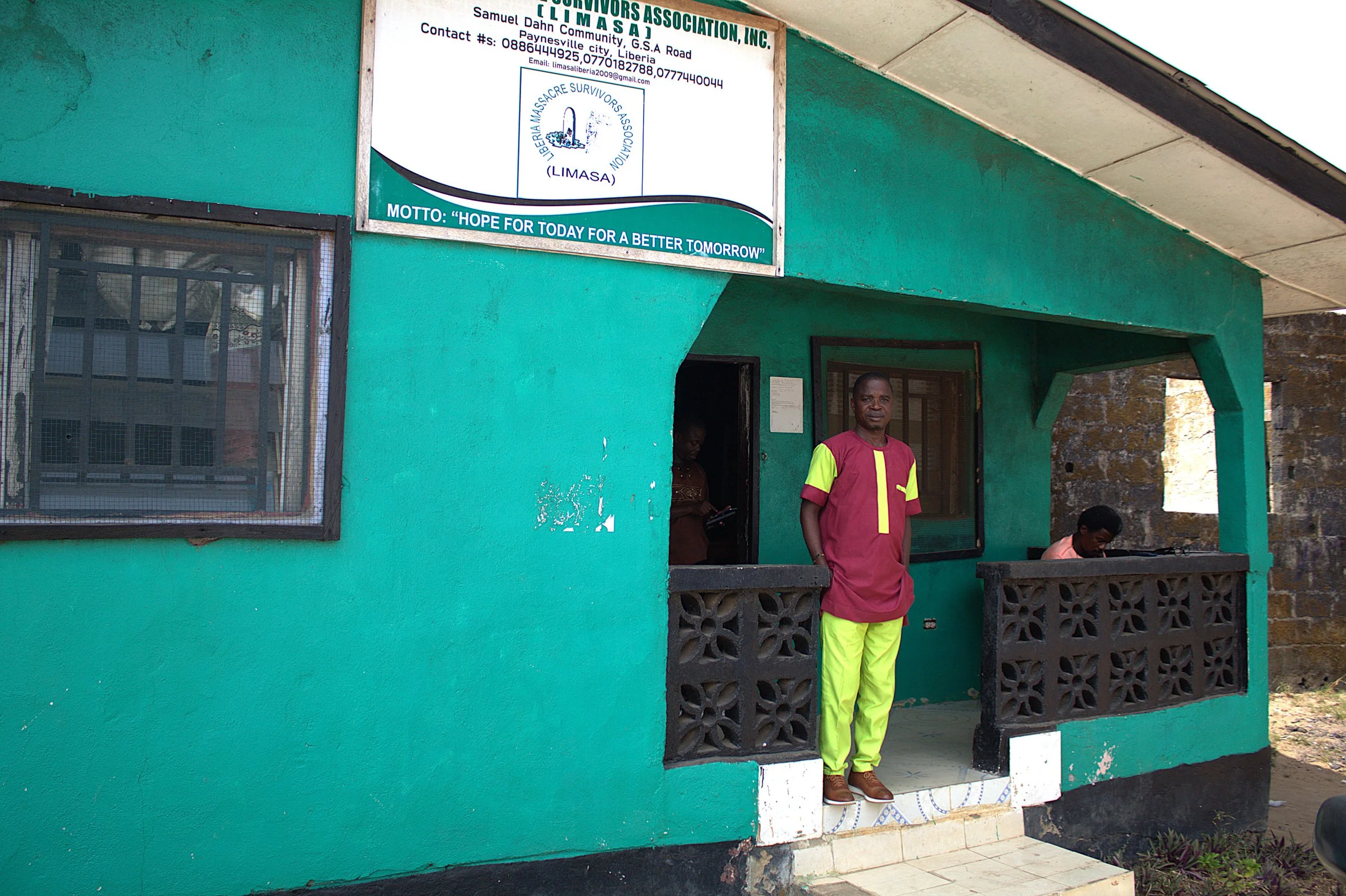
Peterson Sonyah stands outside the headquarters of the Liberia Massacre Survivors Association. He founded the organization following the 1990 St. Peter’s Lutheran Church massacre, where government forces under Samuel Doe brutally murdered over 600 people, including seven members of Peterson’s family. (Graziana Solano)
A Negative Peace
Until the war erupted, Peterson had spent his entire life in Monrovia. Since the nation's founding, the capital had seen a continuous succession of Americo-Liberian presidents for over a century. That changed in 1980, when Samuel Doe, a 28-year-old former sergeant, seized power in a coup, becoming the first indigenous president in Liberian history. Nine years later, Charles Taylor, leader of the National Patriotic Front of Liberia, launched a rebellion to topple Doe’s military regime. This marked the beginning of the firsr war.
Peterson’s parents had moved to Monrovia from the north as young adults. “My father worked as an insurance agent; my mother was a domestic worker. I was a 16-year-old boy who played soccer in the streets after school. I dreamed of becoming a professional player,” says Peterson, now 50, sitting behind a desk in his office in Paynesville, a suburb east of Monrovia. Dressed in a long green tunic, he talks with a cordial demeanor and eyes brimming with kindness.
It was around 10 p.m. on the night of July 29, 1990, when Doe’s forces breached the gates of St. Peter’s Church, where Peterson, his family, and thousands of other displaced civilians had sought refuge. First, they went for the women, raping and then murdering them; those without money met this fate. His mother was fortunate enough to have a few dollars with her, but most had nothing—not even water.
Then they came for the men. They massacred hundreds. To save his life, Peterson lay motionless in a pool of blood, pretending to be dead. “It was dawn when they finally left. My father had been wounded in the leg and asked me for water. I went out, but at the well, I found a young girl crying over her mother’s corpse. I tried to help her, seeking to find out if any of her other relatives were still alive. When I returned inside, my father was dead, along with six other members of my family.”
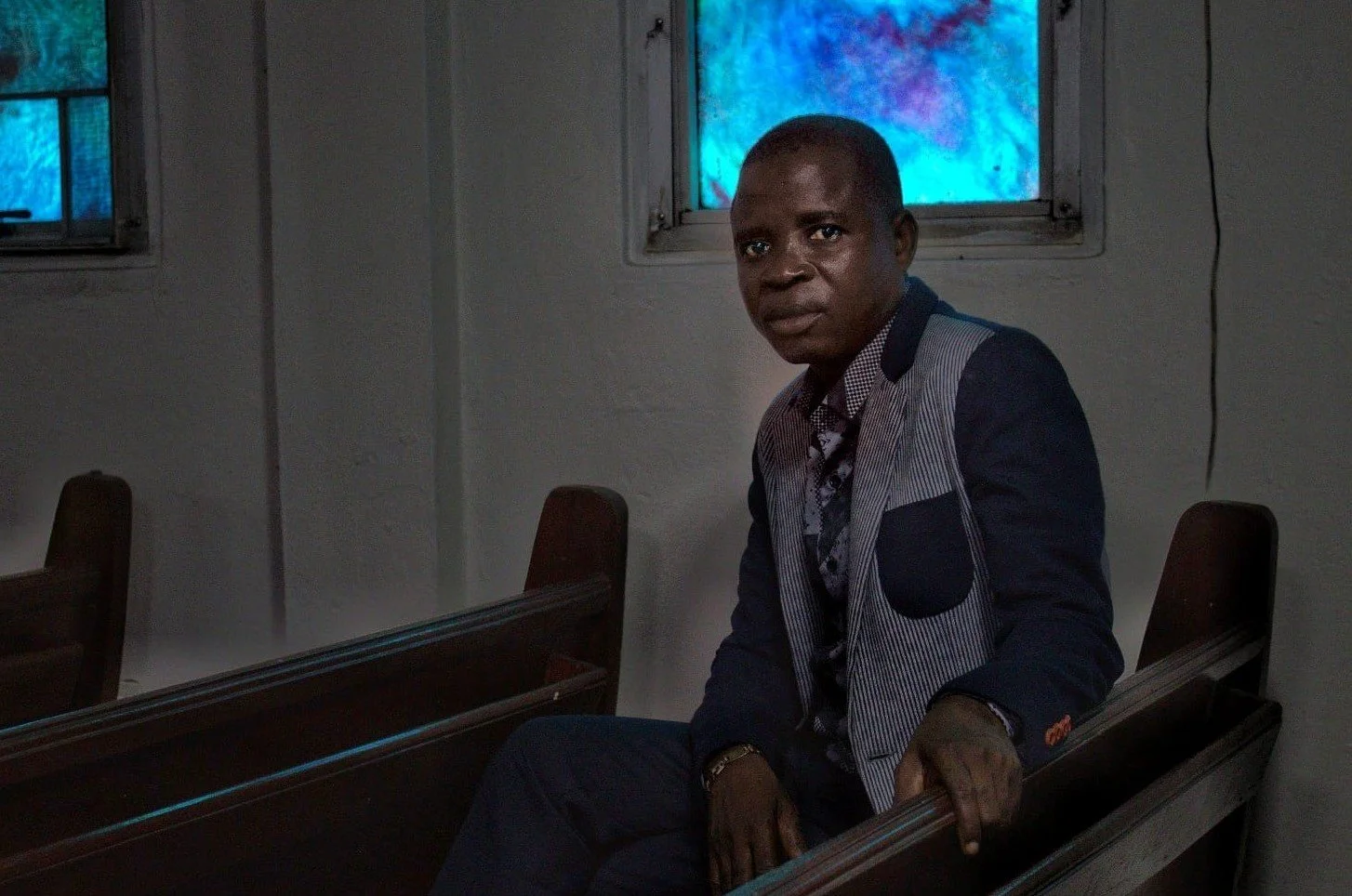
Peterson Sonyah sits inside St. Peter’s Lutheran Church in Monrovia, the site of a 1990 massacre where government forces slaughtered over 600 people with guns and machetes, and hundreds of women and girls were raped. Then 16, Sonyah survived by lying still for hours among the bodies, pretending to be dead. Seven of his family members, including his father, were among the victims. (Graziana Solano)
Peterson never sought revenge. He could have joined the rebel forces, could have become a child soldier, but he said no. Instead, he headed north to Nimba County with his sisters and mother. There, as members of the Gio ethnic group—one of the most persecuted under Doe’s military regime—they sought the protection of Prince Johnson, a rebel leader of the same ethnicity.
“That is why many in the north honored his memory when he died last year. But not me. I seek justice and peace,” Peterson says. For much of that region, Johnson was, and remains, a hero—the man who protected his community from the persecution of a dictator who took the presidency by force, and whom Johnson eventually captured and killed. The crowds of supporters at his funeral in late January of this year, which made international headlines, represented only a fraction of Liberians.
The "peace" Peterson speaks of is a slippery concept, according to Aaron Weah, a Liberian academic and co-author of Impunity Under Attack. Published over a decade ago when Liberia established a commission to address the aftermath of its two civil wars, the book recommended the prosecution of over 100 alleged war criminals. Some of them hold political office today.
“The former rebel Johnson did exactly that. For twenty years, he used his influence as a senator and the threat of renewed conflict to prevent previous administrations from creating a special court. For all these years, Liberia has had a 'negative peace,' and Johnson was primarily responsible,” Weah explains over tea at a restaurant in Monrovia’s Sinkor district. “We must be careful not to confuse peace with stability. The transition from war to peace remains incomplete because the rules and regulations continue to perpetuate inequality and injustice. There are still too many unresolved issues in this country to speak of a 'positive peace.'”
A Leadership Vacuum and the Shadow of Trump’s America
Alain Werner, director of Civitas Maxima, sounds disappointed over the phone. He explains how, for the past decade, the Geneva-based NGO—which documents genocide and war crimes—has worked with Liberian partners to ensure survivors could find justice abroad through the principle of universal jurisdiction.
“In Europe and the United States, we’ve collaborated on six different trials related to crimes committed during the conflicts and pushed for the creation of a local special court,” Werner says. “We’ve spent years gathering information and speaking with victims, but we don’t see any real political will. The survivors are dying, or they are already gone.” His colleagues in Liberia, he adds, face constant attacks, threats, and lawsuits.
“Of course we want to keep collaborating, but the Liberian government must show us it wants the same thing. We need to see results and a clear action plan.” Werner points out that President Boakai initially appointed the former lawyer of Charles Taylor’s wife to lead the office responsible for establishing the court. Taylor is currently serving a 50-year sentence in the U.K. for crimes including terrorism, rape, and the recruitment of child soldiers. Following heavy criticism for undermining the process’s impartiality, Boakai appointed a new lead who now insists there is a “strong political will” to deliver justice.
Yet, actions on the ground tell a different story. In January, the Liberian government reportedly contributed nearly $340,000 to the funeral of the former warlord Prince Johnson. In March, it promised a dignified burial for former President Samuel Doe—the man responsible for the St. Peter’s Church massacre—as a symbol of "reconciliation."
“Many victims of that massacre are still buried in mass graves beneath the basketball court in the church yard,” Peterson explains. He and others have spent years pleading with the government to exume the bodies for a proper burial, but the remains have yet to be moved.
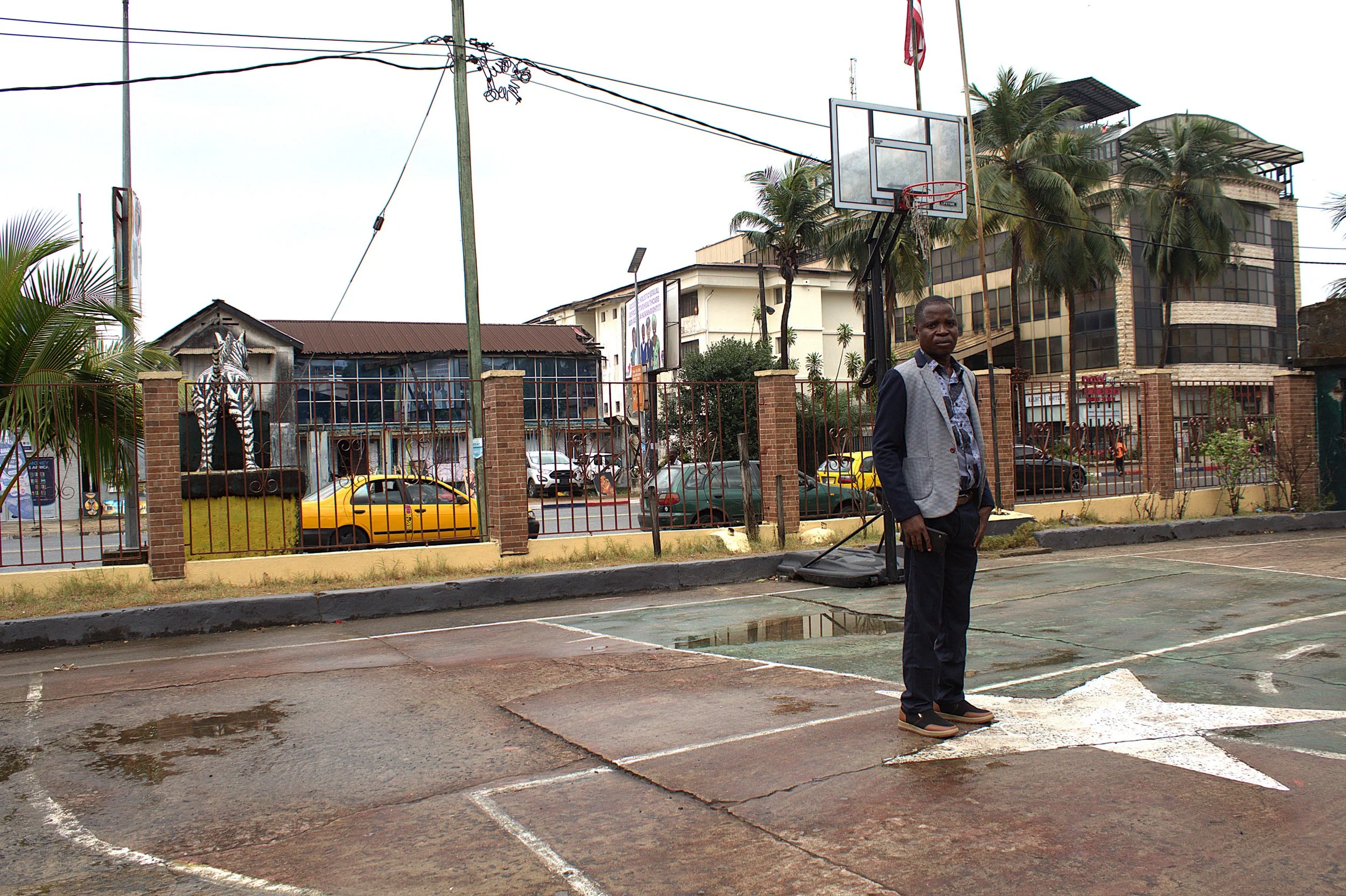
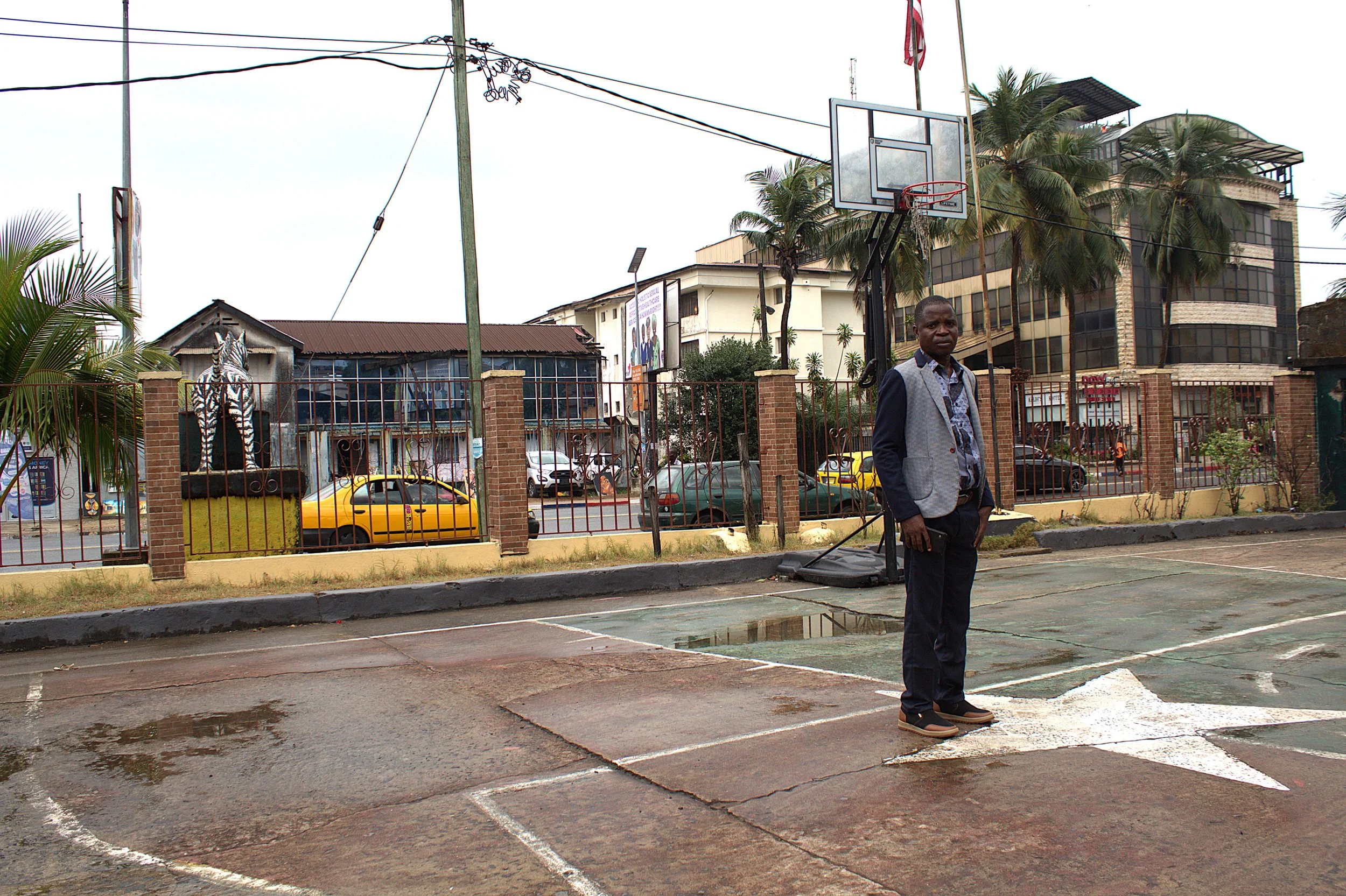
Peterson Sonyah at the basketball court outside St. Peter’s Lutheran Church, which sits adjacent to a school. Beneath the ground where students now gather and play, the remains of 1990 massacre victims stay buried. Despite decades of recommendations for the government to exhume the bodies, they have been left undisturbed for more than twenty years since the civil wars ended. (Graziana Solano)
According to data from Afrobarometer, while 60 percent of Liberians in 2022 preferred to move past the crimes of the war, 70 percent believed a court was necessary. Last year, that figure climbed toward 80 percent.
Werner remains deeply skeptical, citing political hurdles, legal challenges, and a fundamental lack of leadership. While the Liberian government has allocated $500,000 to the project, it is a drop in the bucket. The administration initially hoped to secure $100 million from international donors, primarily the United States.
“How can you hope for foreign funding when the primary stakeholder doesn’t show a real commitment?” Werner comments. “It’s been a year since the executive order. I’m trying to be a realist. Furthermore, the United States is not the same country it was last year, when a Democratic majority in the Senate was pushing to help Liberia.”
Indeed, following an executive order signed by Donald Trump on January 24, thousands of projects funded by USAID—the world’s largest development agency with an annual budget of $40 billion—received notices to suspend all activities.
In Liberia’s case, the impact was immediate. From $110 million in aid provided in 2024, including support for human rights organizations, U.S. funding was slashed to nearly zero in the first month of 2025—regardless of the project’s necessity or cost. Werner believes that in the current political climate, it is unlikely the U.S. will continue to support the creation of the war crimes court.
Despite the gloom, Peterson refuses to consider failure. “The court will be established, with or without foreign funds,” he says, his voice steady. He recalls the only threat he ever received: it came years ago from Prince Johnson himself.
“He called me into his office and told me that this association for survivors I was talking about on the radio was the wrong thing to do—that I would cause trouble,” Peterson says. “He had committed atrocities; it’s natural he didn’t like me. But I didn’t give in to the blackmail. Above all, I have never had a single doubt about the work I do.”